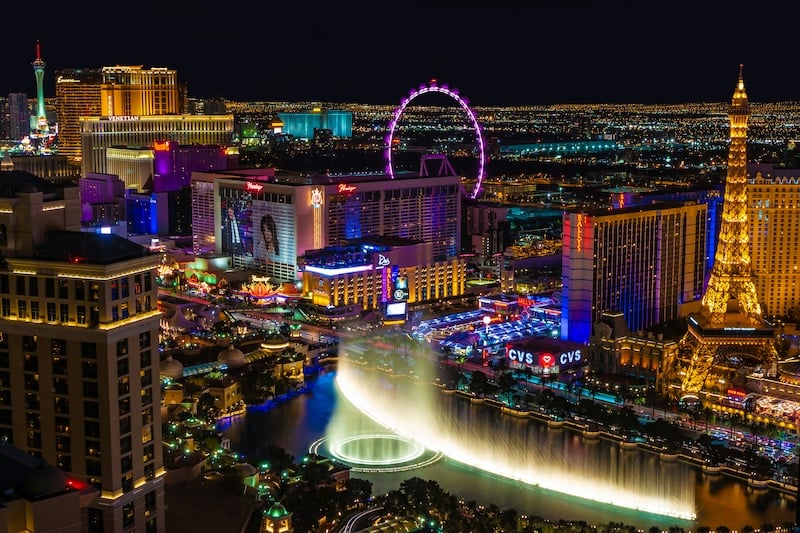
Las Vegas is no longer attracting visitors as it once did. Figures show that the US city drew about 3.1 million fewer tourists in 2025, which represents a 7.5% drop, yet sports trips and betting-linked travel remain central to the next recovery story. For travellers tracking events and markets through tools such as the 1xbet app, the useful question is not only what happens in the sportsbook, it is whether the trip itself is now being planned around games, fight nights, motorsport weekends and the gaming spend that follows.
Fewer Visitors Make Each Trip Work Harder
The headline number is difficult to ignore. A 7.5% annual visitor decline means Las Vegas cannot rely only on casual leisure trips filling rooms through the week. Midweek demand has softened, and hotels have had to work harder to protect occupancy.
That changes the reading of the city’s travel economy. A visitor who comes for one event may matter more than before because the trip has a clearer purpose. A weekend built around a major game can support room nights, restaurant spend and gaming activity in one short window.
The old picture was simpler: Bright lights, cheap midweek rooms and a steady leisure crowd. The newer picture is more selective. Travellers need a reason that feels worth the cost. Sports can supply that reason because the date is fixed and the event cannot be moved to a cheaper month.
Sports Events Are Now a Tourism Engine
Sports are no longer just a side attraction in Las Vegas. Around 1.8 million visitors attended a sporting event during their stay in 2024, with spending estimated at $3.6 billion. That is not background traffic, rather it is a travel category with its own economic weight.
The strongest sports weekends work because they compress demand. A fight night or major team event gives the city a short, intense window of activity. Hotels can price around it and restaurants fill before and after the event. Sportsbooks get a sharper betting calendar.
This is where betting tourism becomes more visible. The traveller is not only watching the event. They may also be following odds, props or live markets around the same trip. That does not make betting the only reason to travel, but it places gaming activity closer to the event itself rather than treating it as a separate casino-floor stop.
Gaming Revenue Still Anchors the Visitor Economy
Las Vegas remains a gambling city even when sports headlines pull more attention. Current tourism indicators show Clark County gaming revenue at $13.6 billion, with the Strip accounting for $8.8 billion. Those figures matter because they keep betting and casino spend at the centre of the city’s visitor model.
Hotel data adds another layer. Las Vegas had about 150,300 rooms in 2025, with annual occupancy around 80.3% and average daily room rate near $183.52. That means even small changes in visitor volume can become visible quickly across the room market.
Gaming spend also matters because it connects travel choices with on-site activity. A shorter trip can still produce meaningful gaming revenue if the visitor is there for a specific event. In practice, that makes event-led travel more valuable than a simple headcount suggests.
What Changes When Sports Lead the Trip
Sports-led travel changes the betting story because the event becomes the anchor. The visitor may arrive for a game, then fold in casino time, dining and sportsbook activity around it. That is different from a general leisure trip where gaming may be one item among many.
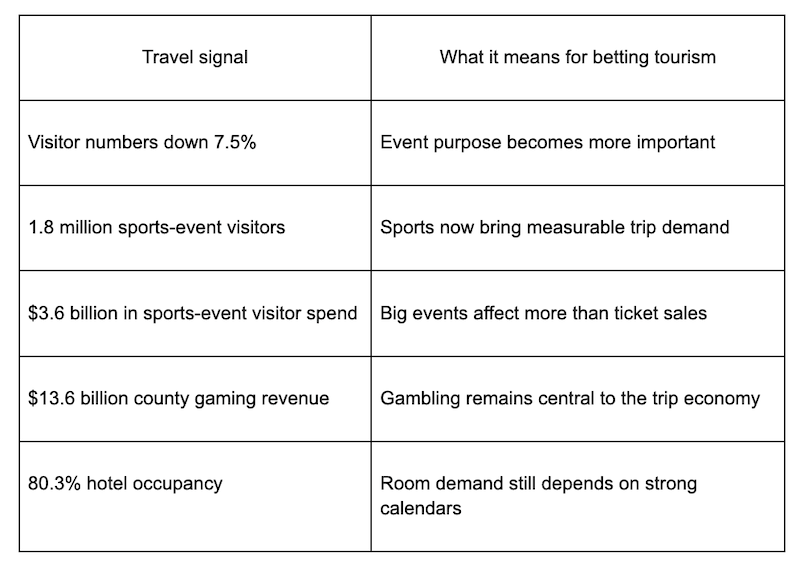
The table shows the main tension: Las Vegas has fewer visitors than before, but the value of certain trip types may be rising. Sports weekends can carry hotel demand and betting interest at the same time.
The Next Travel Story Is About Purpose
Las Vegas now has to prove that a trip is worth making. Sports give that argument a set date, while betting gives the visit another layer once the event is in view. At the same time, casino spend gives the wider tourism economy its familiar base.
The risk is overreading one category. Sports cannot replace every lost midweek visitor and betting activity cannot carry the city by itself. But together, they explain why Las Vegas tourism is moving toward more event-specific trips.
The next phase will be judged by calendars as much as slogans. When the city has a major event, the travel case looks stronger. When the calendar thins, the 2025 visitor decline becomes harder to ignore.
Responsible betting belongs inside that same realistic view: Sports and casino activity can be part of an adult trip, but the strongest travel story is still about purpose, budget and timing.