
I am a big fan of Norway and I recently enjoyed a return trip to the Scandinavian country for a ski touring holiday on the island of Senja. Previously, I’ve visited the Lyngen Alps, on northern Norway’s mainland, for a ski touring trip. I have also travelled to the resorts of Voss and Myrkdalen, near Bergen and another resort, Trysil, south of Oslo. This is my brief guide to a ski touring holiday on Senja.
Where is Senja?
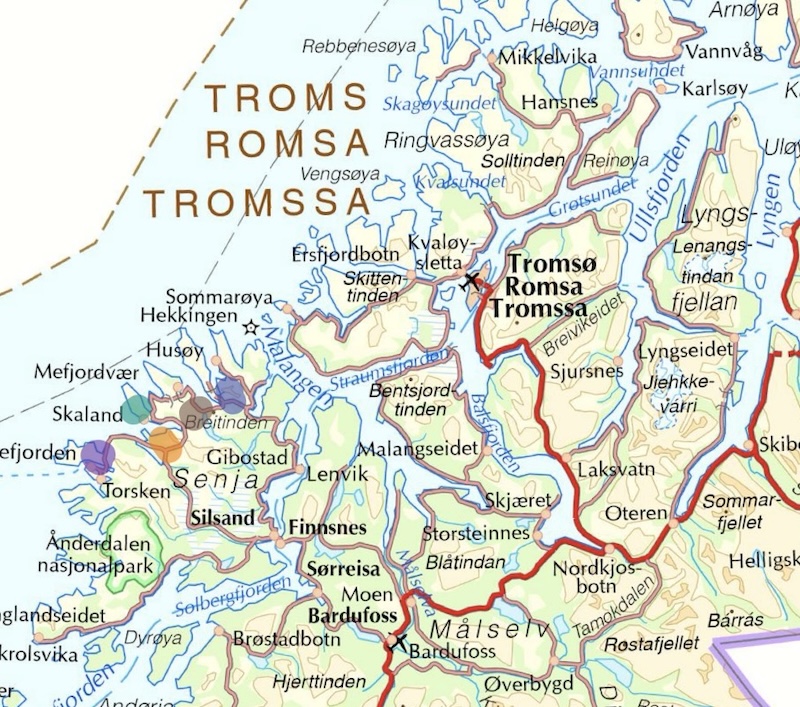
Senja is an island located off the north-western coast of Norway and to the west of the airport town of Tromso, on the mainland. Senja is the country’s second largest island (after Spitsbergen) and extends to a length of 70km. It is situated some 300km north of the Arctic Circle.
How to get to Senja
It depends where you are starting your journey but the aim is to reach Tromso before heading to Senja. I started with a train journey from Inverness to Aberdeen.
Some flight options from Scotland:
With Wideroe: Aberdeen to Bergen; Bergen to Tromso.
With Scandinavian Airlines (SAS): Aberdeen to Stavanger; Stavanger to Oslo; Oslo to Tromso.
With Norwegian Air: Edinburgh to Oslo; Oslo to Tromso.
There are obviously many other options, especially if you are travelling from London.
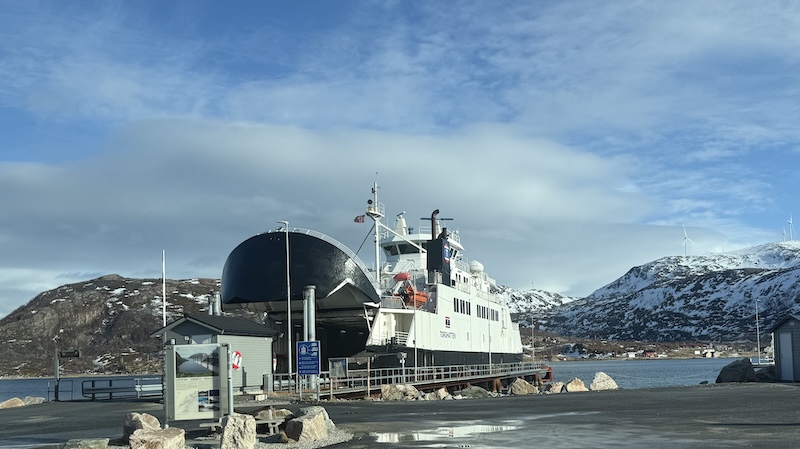
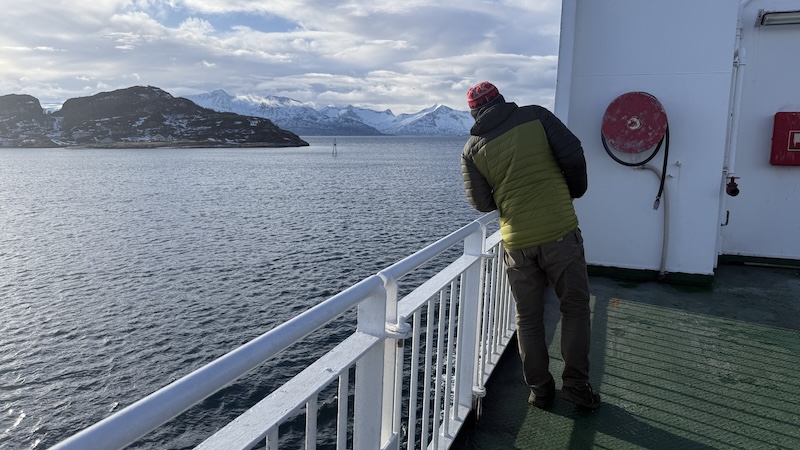
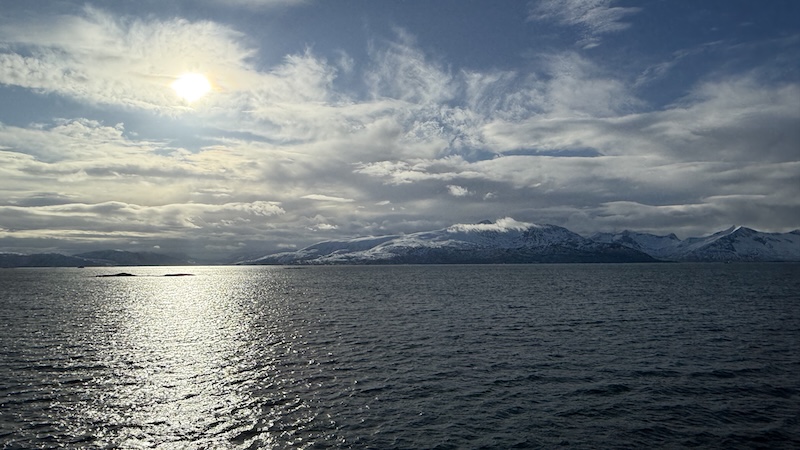
From Tromso, you can reach the island of Senja by car (we hired a car at Tromso airport) and then by taking a ferry: Brensholmen (Kvaløya) to Botnhamn (Senja) operates all year with a travel time of about 40 minutes.
Ferry tip 1: The ferry is a first-come-first-served service. You can’t book ahead and it takes between 30 and 50 cars. Note that the ferry also carries lorries and motorhomes, which are obviously bigger than a car. To be sure of a place on the ferry you need to arrive early. We aimed for an hour before departure.
Ferry tip 2: The payment for the ferry is done automatically via a vehicle licence plate recognition system, AutoPASS or FerryPay. If you are in a rental car, the company will charge you for the fare. The cost is around £20 per car each way.
Other options include driving from Tromso to Finnsnes and across a road bridge to Silsland in south-east Senja.
It depends what part of the island you want to get to. Since I was staying at Laukvik, in the north-east of Senja, it made sense to take the ferry to Botnhamn, some 6km south of Laukvik.
Another option for reaching Senja, is the Express Boat (water bus) from the centre of Tromso to Finnsnes. You can also hire a car from here (which is cheaper than from Tromso airport).
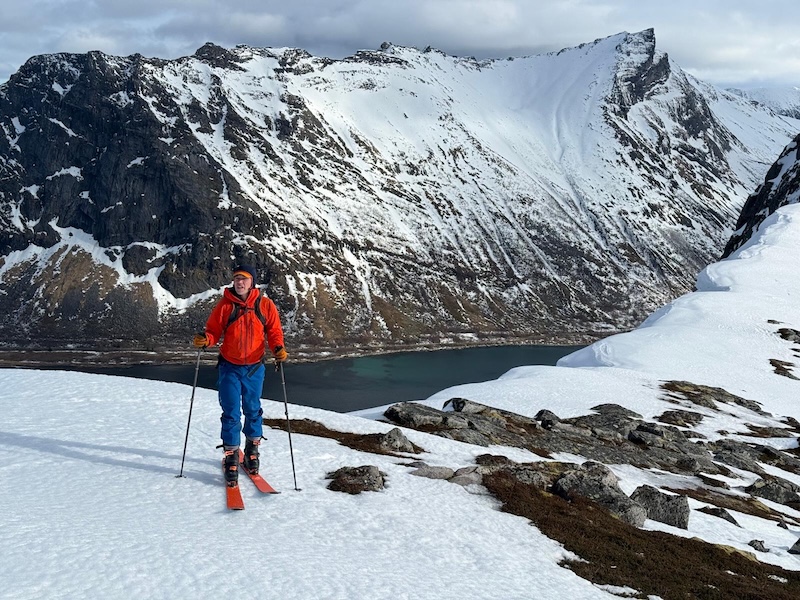
Why choose Senja?
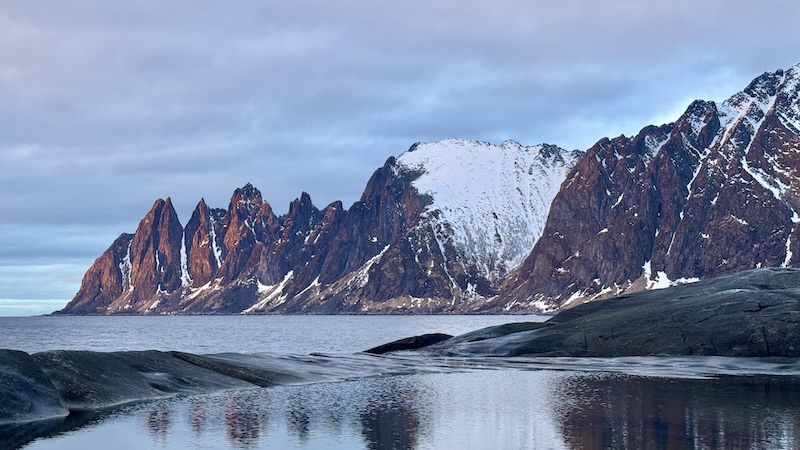
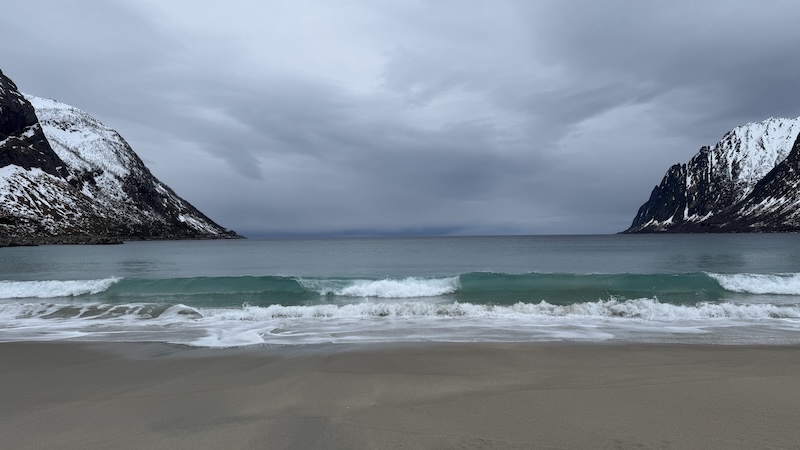
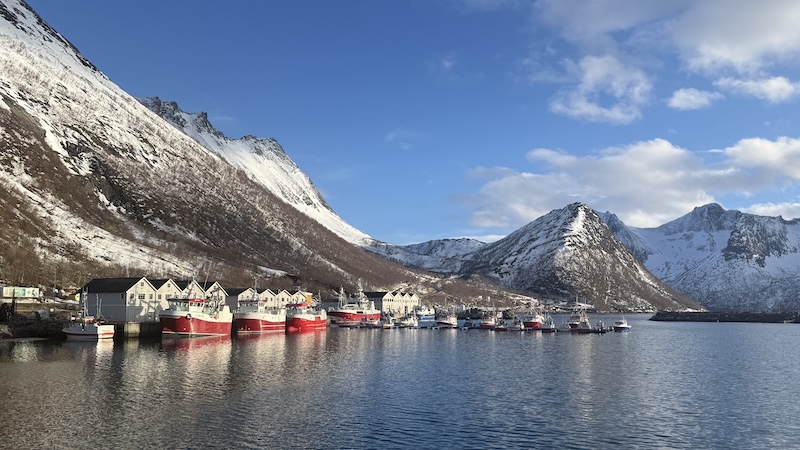
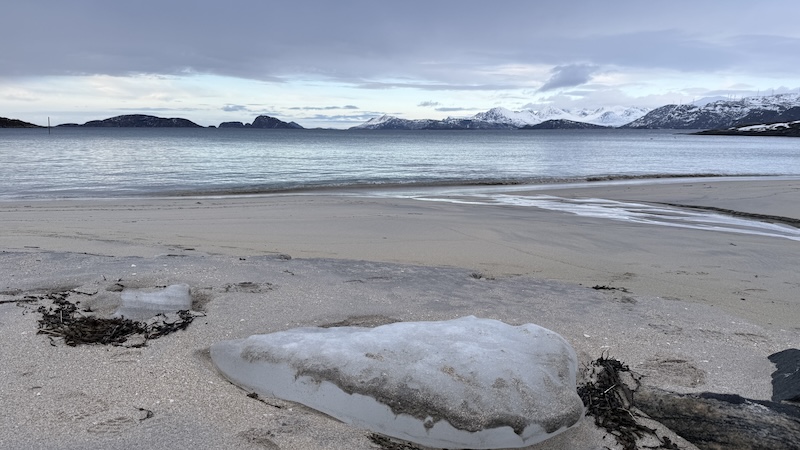
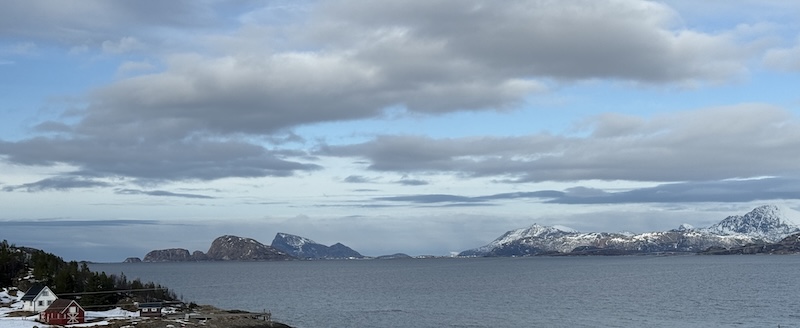
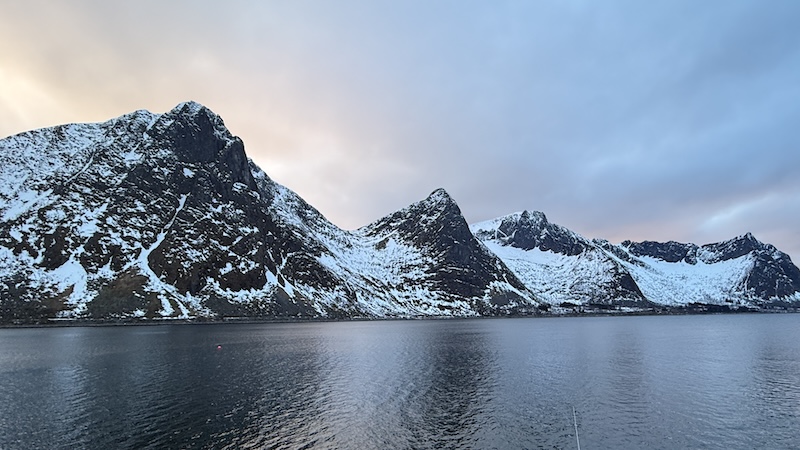
Senja is frequently referred to as “Norway in miniature”. It is acclaimed for its superb scenery, including picturesque fjords, jagged mountain ridges, mountain slopes that rise/ plunge precipitously from the sea, colourful fishing villages and beaches.
For skiers, there is the joy of skiing from sea to summit and then back downhill to the sea again.
Hubby G and I had heard great things about Senja, from skiers and climbers, and when we were invited to join a group of friends from the Scottish Highlands on a trip to Senja we jumped at the chance.
Referring to the app, skiguide.app, we could see there were plenty of ski touring options. I counted more than 20 routes, from easier greens, through blues, to more extreme reds and a black. The guidebook, Ski Touring in Troms by Espen Nordahl, also details seven routes.
Other options, while staying on Senja, include many more ski touring routes on Kvaløya, an island located between Senja and Tromso, and routes to the south of Tromso.
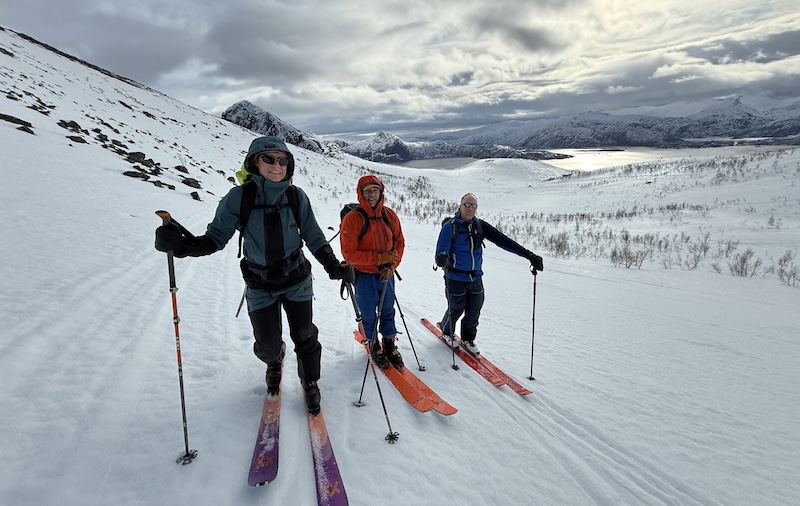
Our group focused on Senja and picked routes to suit the weather and avalanche conditions.
I used another app, Topo GPS, to upload GPX route files to. You can download these maps so you can use them off-line.
A few words about avalanches
Avalanches are a very real danger in northern Norway as you might expect. Slope gradients and the weather play their role. Heavy snowfall, sudden temperature changes, rain falling on snow, or strong winds moving snow around and creating unstable layers can all contribute to avalanche potential.
There are weather apps – varsom.no and yr.no – and also the skiguide.app has details on the day’s avalanche risk but, even so, you need to pay attention to your surroundings as you ski tour.
While Senja’s mountains are not particularly tall – the highest is a little over 1000m – some slopes are very steep. The wind can cause snow to collect on other slopes and in bowls. Our aim was to err on the side of caution, of course, and we changed our chosen routes according to what we could see ahead of us and after discussions as a group.
If you plan to go on a ski touring trip without a guide, it’s vital that you have followed an avalanche awareness course or you are widely experienced in spending time in the mountains in winter.
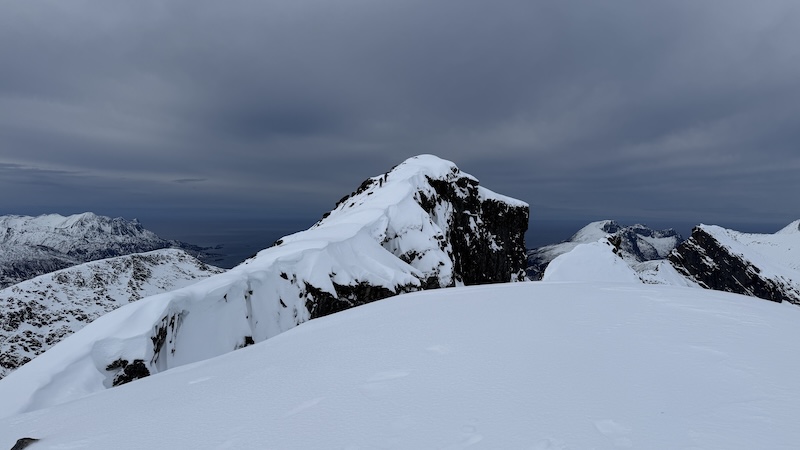
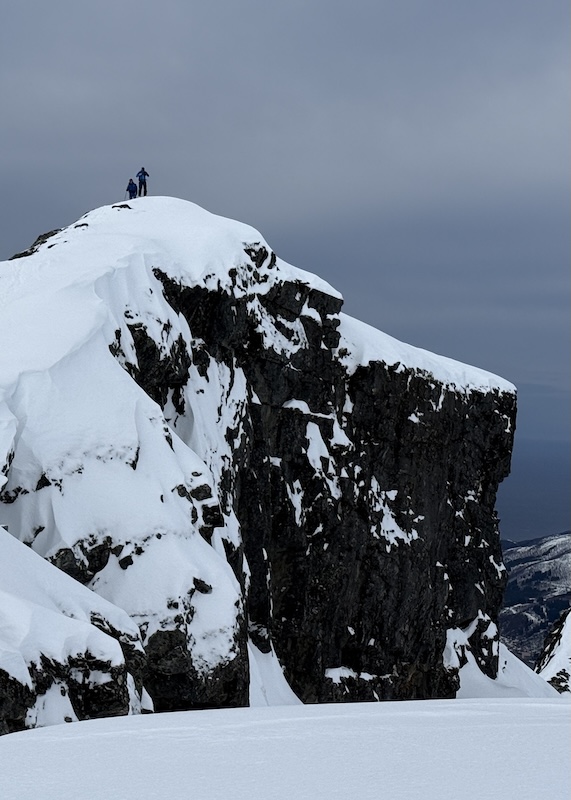
Another danger are huge cornices that overhang on many of the mountain tops and ridges. Make sure you know you are standing on snow that is on top of rock.
Where to stay
There are a range of options for accommodation on Senja, including Senja Lodge & Mountain Guides, Mefjord Brygge, Hamn and Legendary Lodge Senja, to name a few.
We looked at Airbnb and booking.com and ended up booking with Airbnb. Hubby G and I enjoyed a great stay in a cabin in Laukvik and the rest of the group – eight in total – booked a larger cabin two doors along the coast.
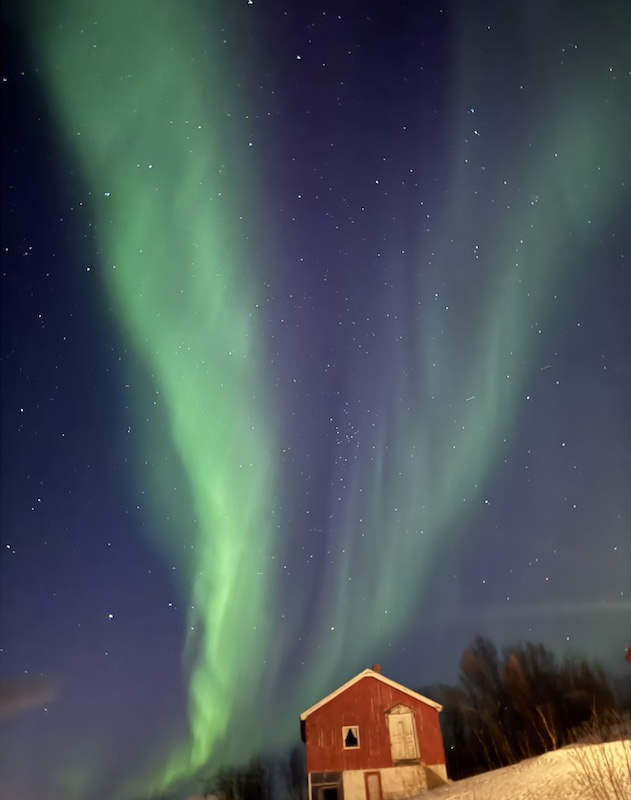
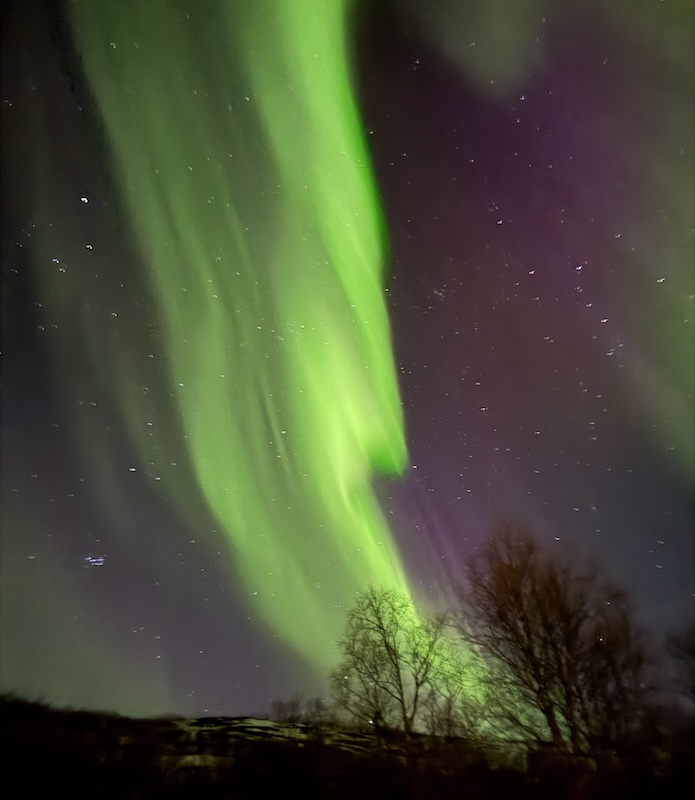
We enjoyed views over a fjord and because we faced north, we also had the best opportunities for seeing the Northern Lights (Aurora Borealis), which we did!
Laukvik is in the north-east of the island, so we needed to drive to our ski tour routes each day. The furthest we journeyed was around 80 minutes. There were routes much further from us and some closer but we picked them according to the group’s desires, the weather and the avalanche risk.
While we rented a diesel car, the other group hired two electric cars. They managed to find EV chargers in different locations and they were able to “trickle charge” their vehicles overnight at the accommodation.
What to eat
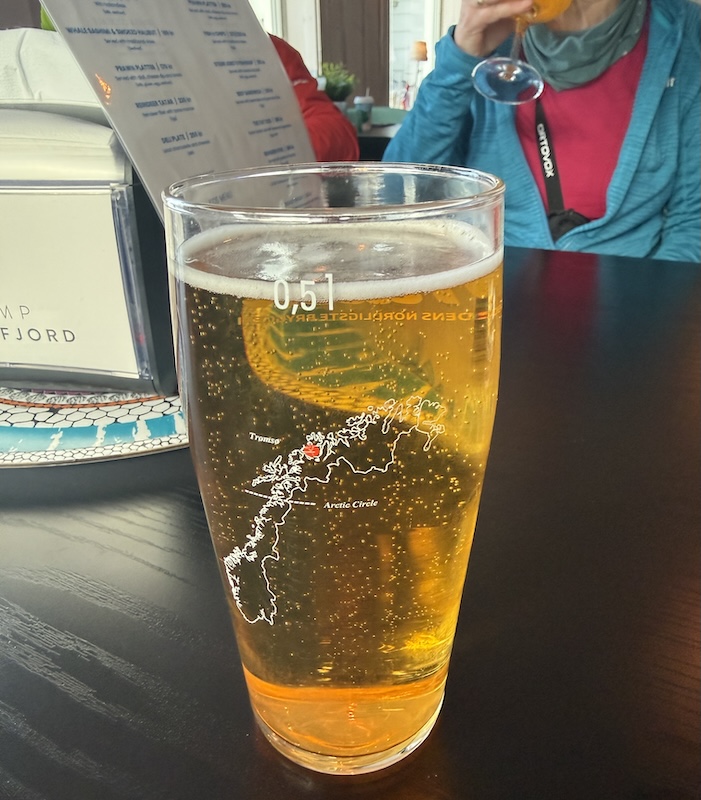
One of the biggest concerns about Norway that I hear is the cost of food and drink in Norway. I can report that in recent years, the prices have dropped and are now much more similar to the UK. However, northern Norway does have higher prices, so it’s worth adding extra budget for food.
We picked up most of our food at a larger supermarket in Tromso, which was cheaper than the local Joker shop at Botnhamn.
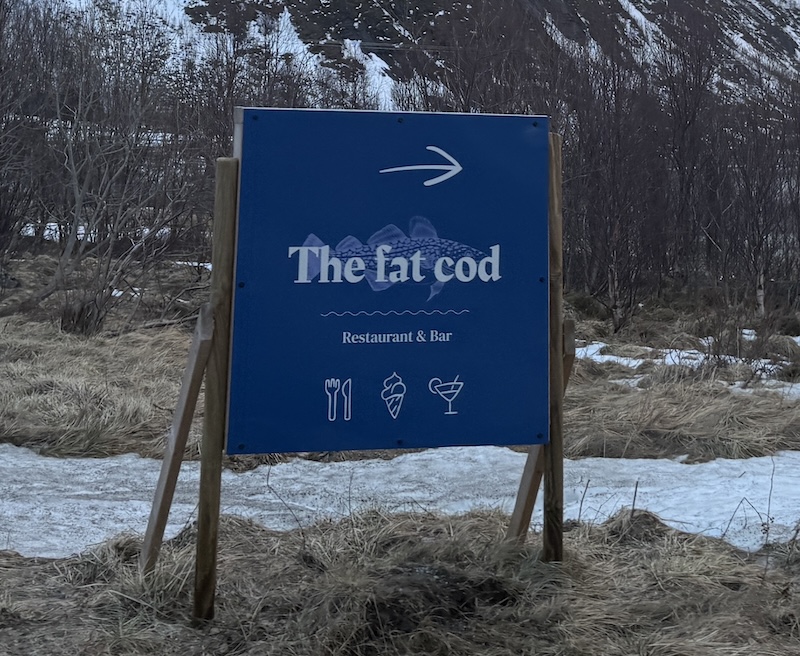
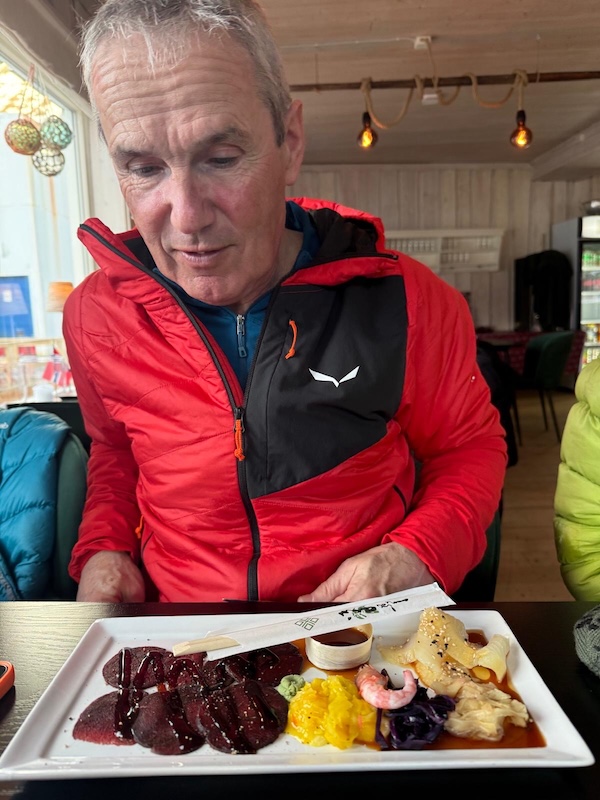
We mostly cooked our own meals throughout the trip, but we also enjoyed a superb meal at The Fat Cod.
What kit to take
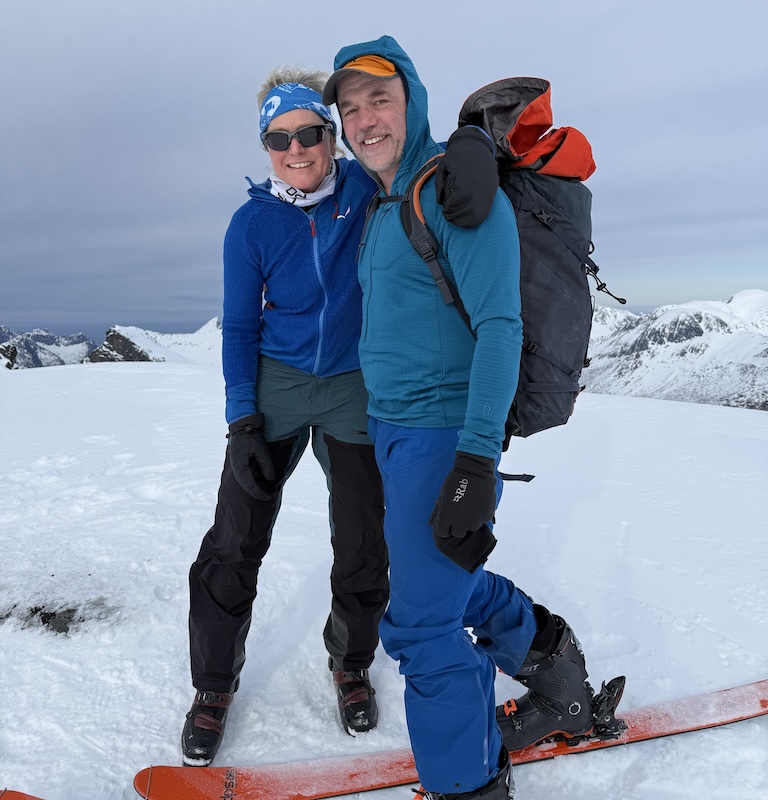
My ski touring kit includes:
What I wear:
Baselayer long-sleeved top and leggings (I choose the thickness of my leggings and top depending on the weather)
Second upper layer – lighter or heavier depending on the weather and temperature
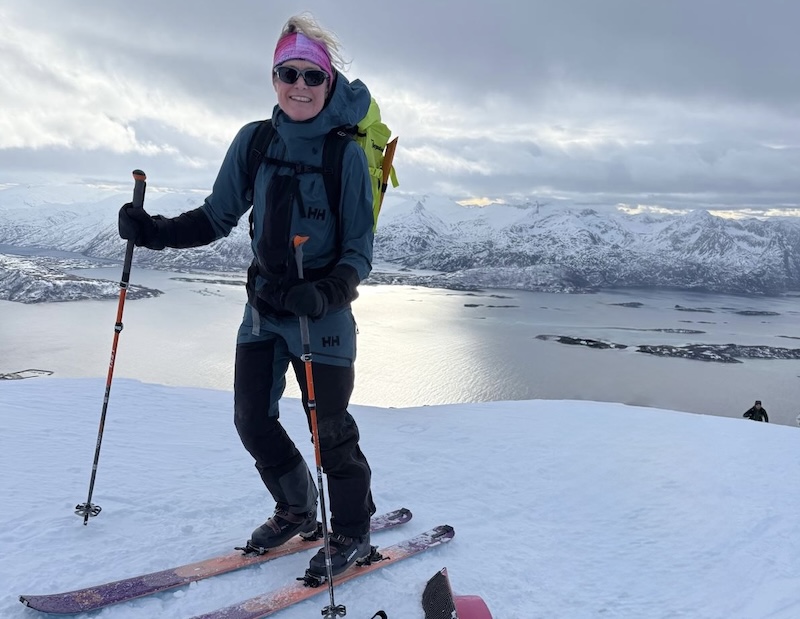
Waterproof and breathable shells – jacket and pants (I wear Helly Hansen Odin Backcountry Infinity Shell Jacket and Pants)
Mittens – different weights depending on whether you are ascending or descending
Neck buff
Head buff or warm hat
Ski socks
GPS sports watch
Smart phone with relevant apps (also useful for satellite messaging and photography)
Extra clothing:
Fleece or lightweight insulated jacket
Heavier insulated jacket
Spare gloves
Ski equipment:
Back country skis – I have women’s Volkl Blaze 94 skis
Skins for the skis
Ski touring boots – I have Atomic Women’s Backland XTD Carbon 115 W Ski Touring Boots
Ski poles – I have Leki Tour Stick Vario Carbon
Extra ski equipment:
Transceiver – I have Mammut Barryvox
Ski crampons
Boot crampons – I have Petzl Leopards
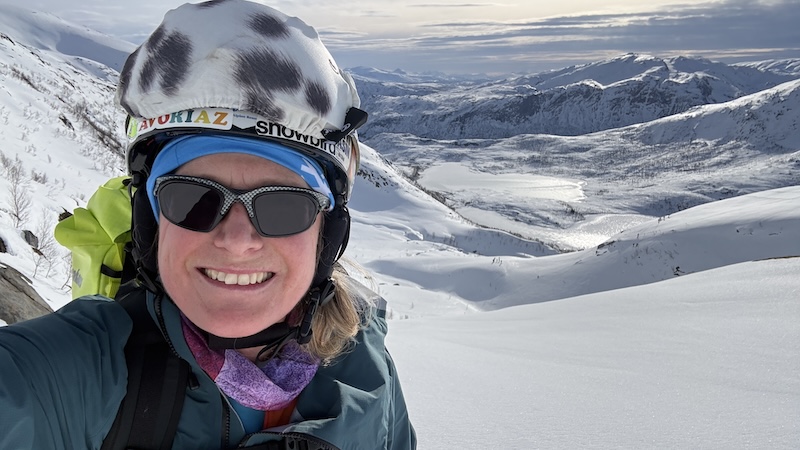
Ski helmet
Snow shovel
Probe
I also added to my rucksack – the Berghaus women’s MTN Guide 32+ pack:
Ski goggles (and protective cover)
Sunglasses
Windproof face cover (if winds got cold or strong)
Extra pair of down mittens
Food
Water
Flask of hot tea
First aid kit – my own selection of items
Compass
Emergency energy bar
Powerbank
Head torch
Emergency shelter bag
Where to ski
As I have revealed above, there are plenty of ski touring options on Senja. Here are some of the routes we most enjoyed.
Store Heston
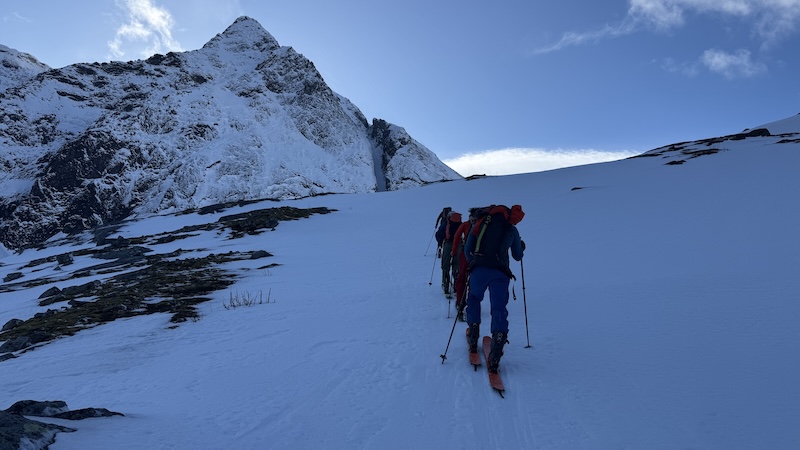
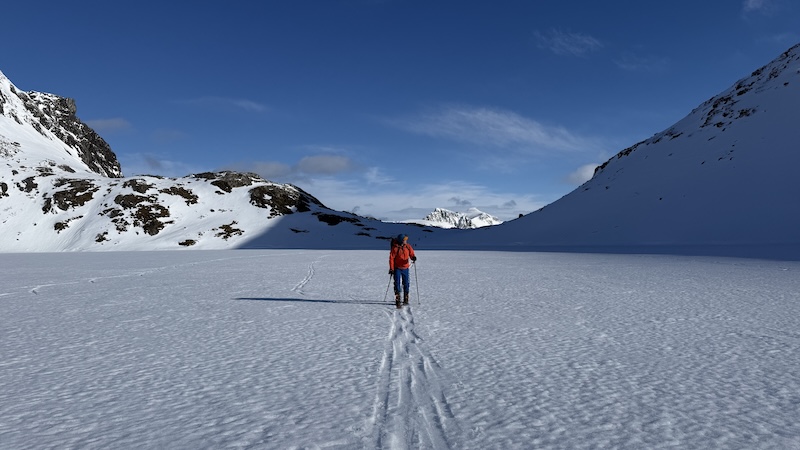
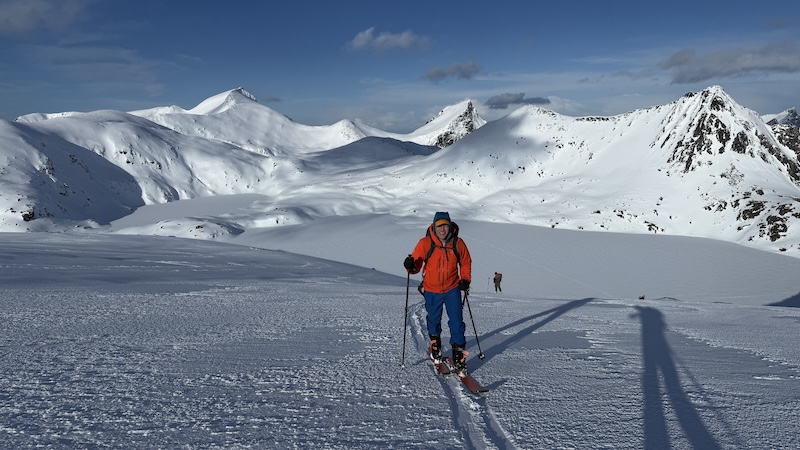
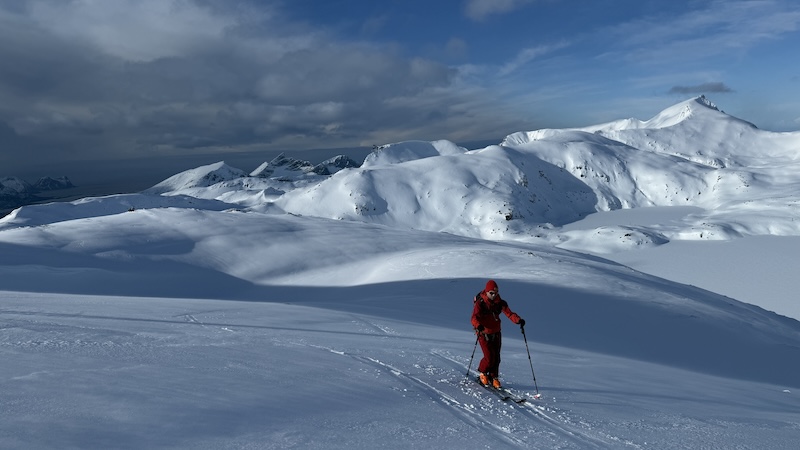
Starting point: Svarthola, on Fv.862 at around sea level
Distance: Around 10km total
Total ascent: Around 1000m
Highest point: 874m
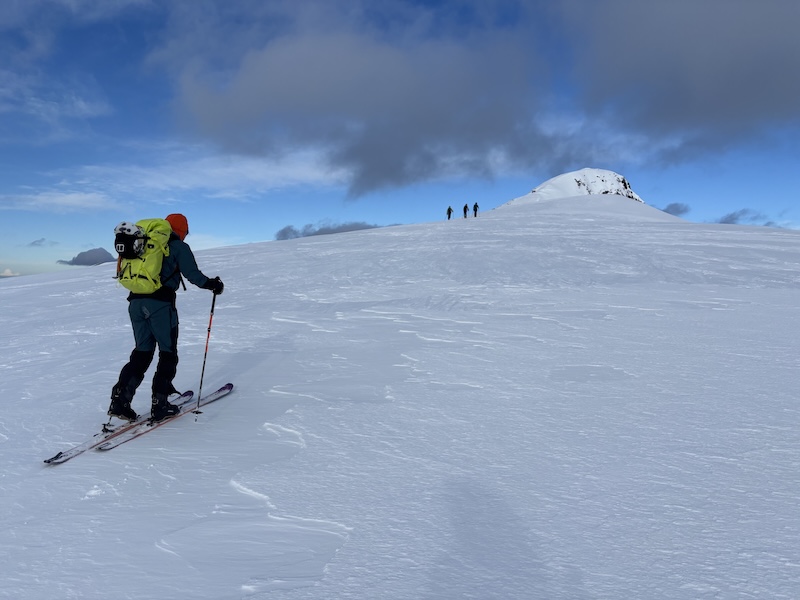
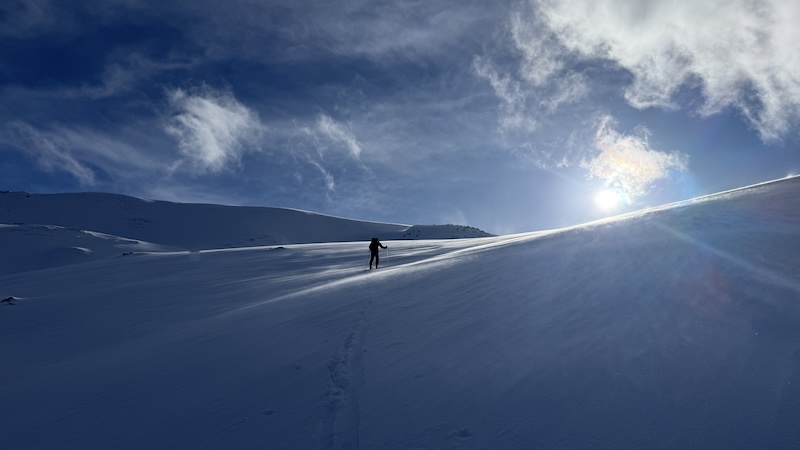
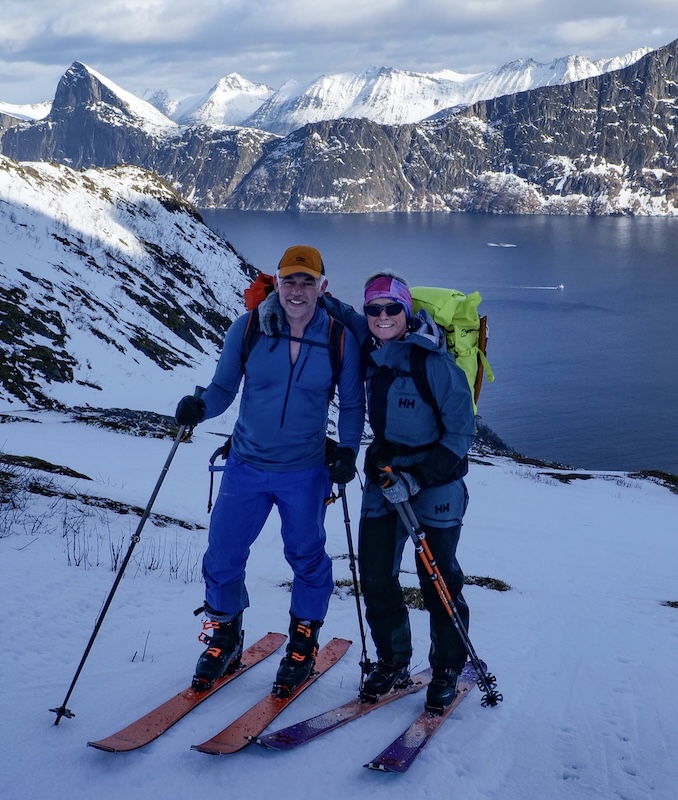
This is one of Senja’s top ski tours and we enjoyed good snow conditions and great views. The clouds stayed high for most of the day and the sun shone.
The route includes a wonderful ski across a large, frozen lake. There were some trickier steep traverses but nothing too daunting.
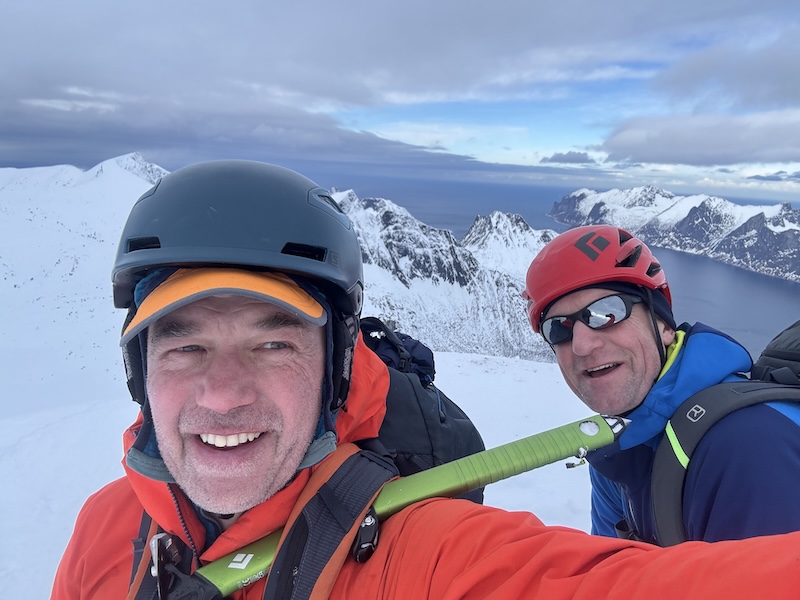
We skinned uphill without need for ski crampons, although the final section to reach the summit required boot crampons and an ice axe. I didn’t brave the last bit but Hubby G and others did.
The ski downhill was good fun on mostly pleasant snow, although fading sunlight meant we had to feel our way a bit. The final section through woodland was in soft and slushy snow that wasn’t easy to negotiate. There were plenty of falls and head dives but thankfully everyone made it down in good shape and good spirits.
I highly recommend you keep this ski tour for a good weather day.
Husfjellet
Starting point: Skaland, parking near the church
Distance: Around 9km total
Total ascent: Around 780m
Highest point: 632m
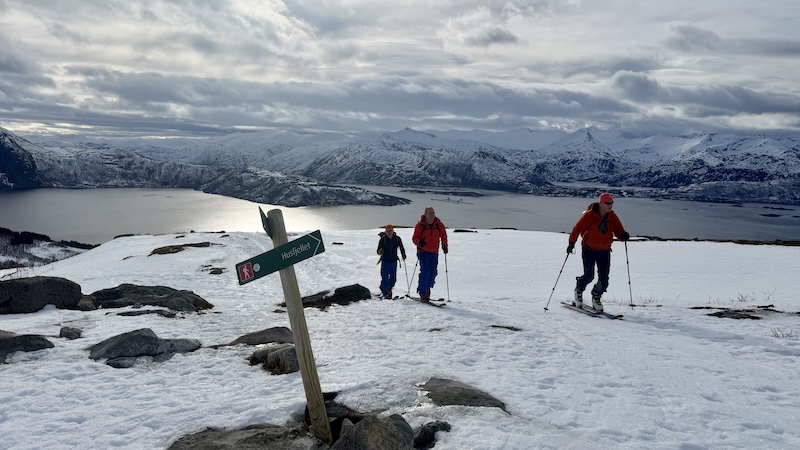
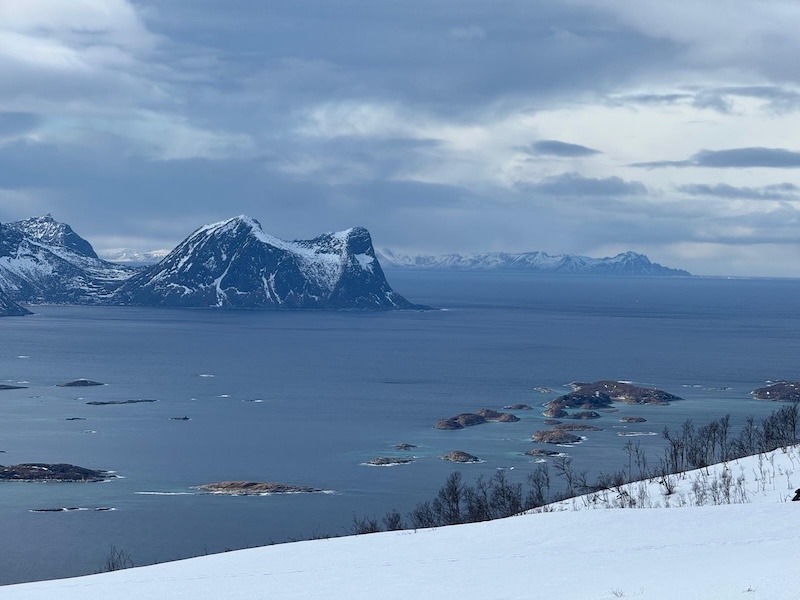
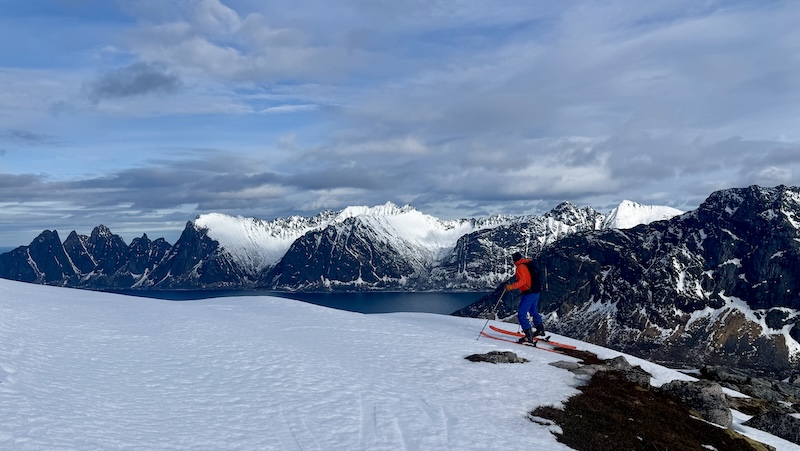
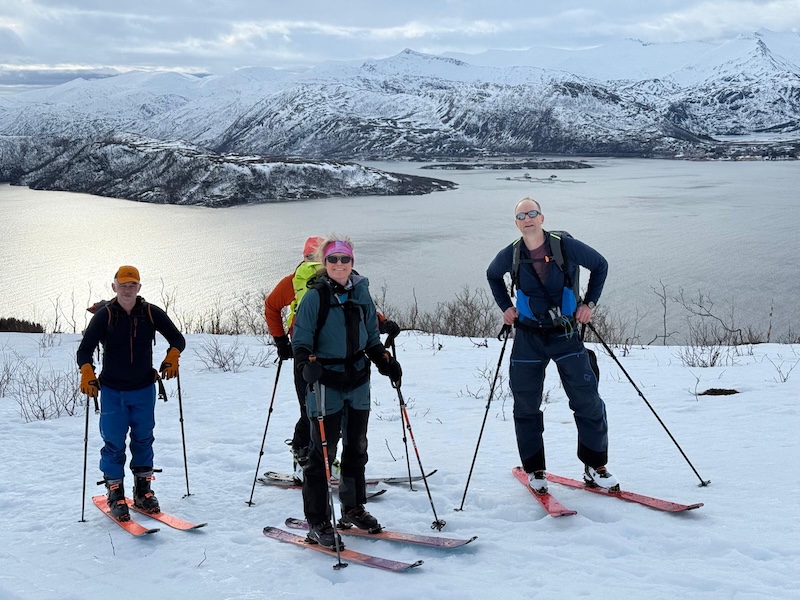
This is another great ski tour on Senja offering some superb views. We skinned up on a snowy trail through woodlands before reaching more open ground. The gradients were mostly fairly easy going and the conditions were generally good.
While the wind picked up at times, we also enjoyed some lovely sunshine and, again, there was some decent snow to enjoy.
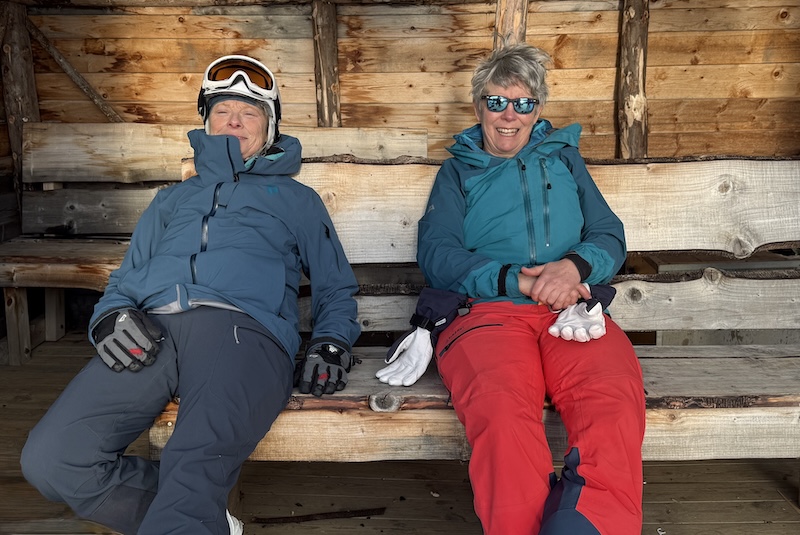
On the way back down, almost back at the car park, we came across two open-fronted huts where we sat and ate a late lunch and basked in the warm sunshine.
If you are looking for a shorter day but with amazing views this is the perfect choice. There are options to do a few laps on the mid to top sections, too.
Keipen
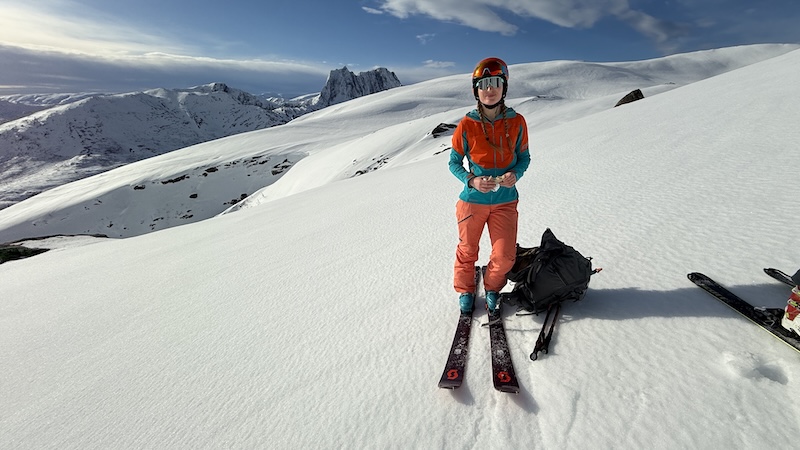
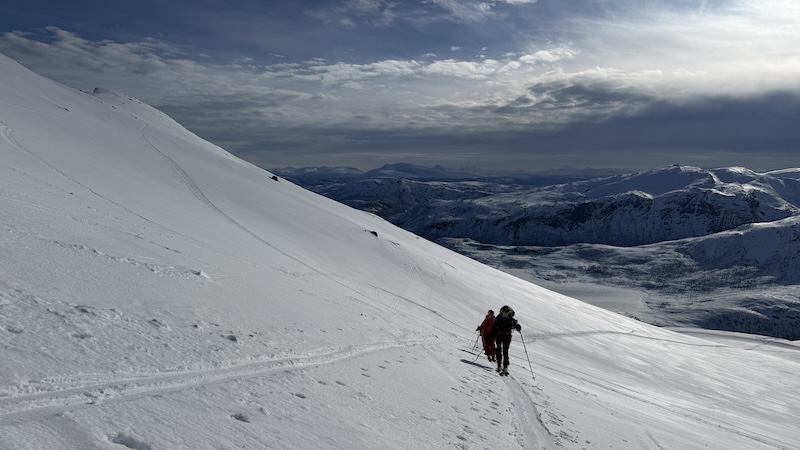
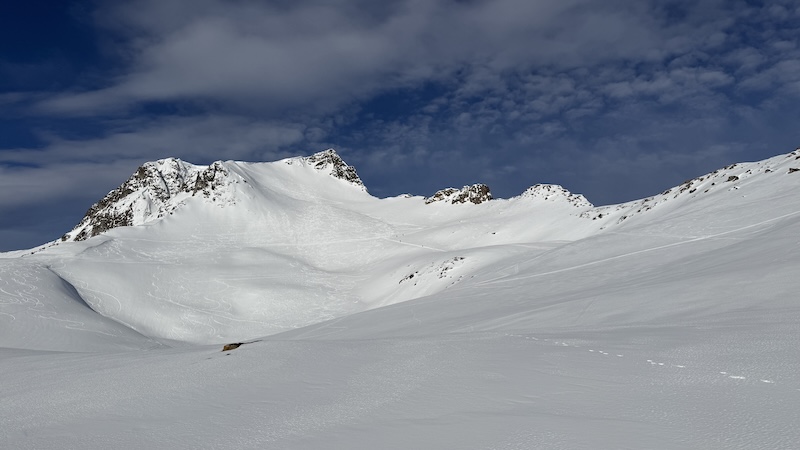
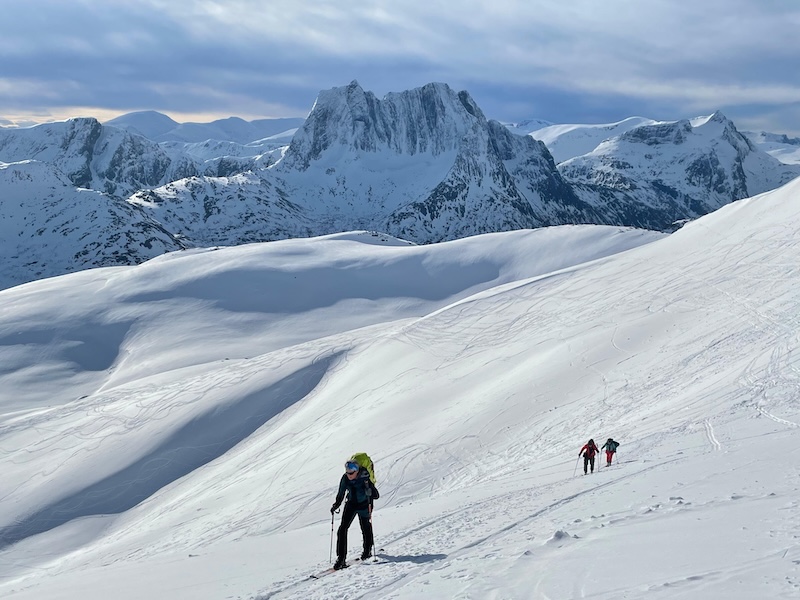
Starting point: Mefjordbotnvatnet, on Fv.862
Distance: Around 8km total
Total ascent: Around 850m
Highest point: 938m
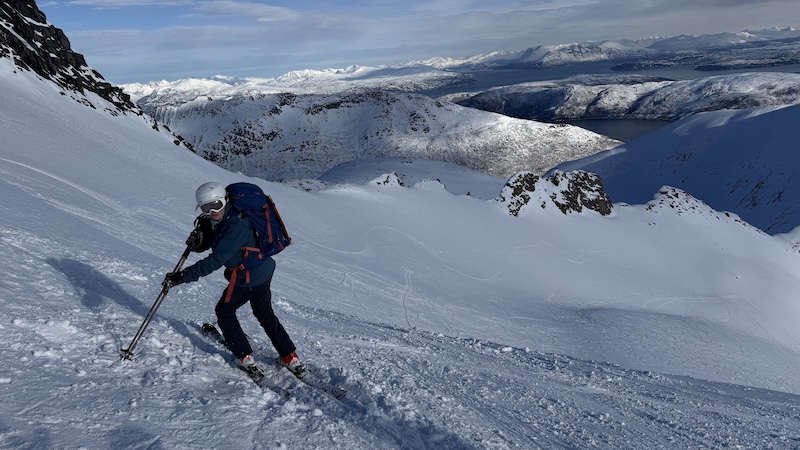
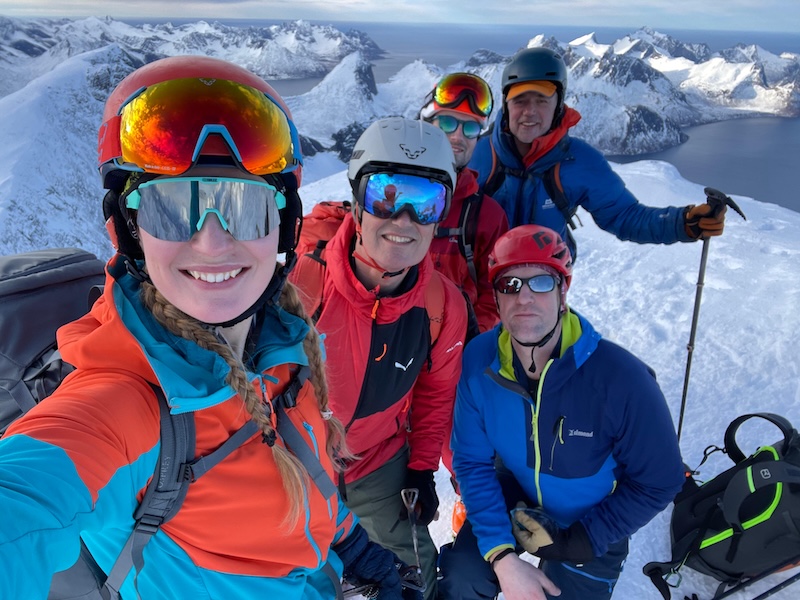
This is a classic ski tour on Senja with more breath-taking views. The start from the roadside heads quite steeply uphill through woodland and then on to more open mountain slopes. The best plan is to skin uphill by zig-zagging to reduce the gradients.
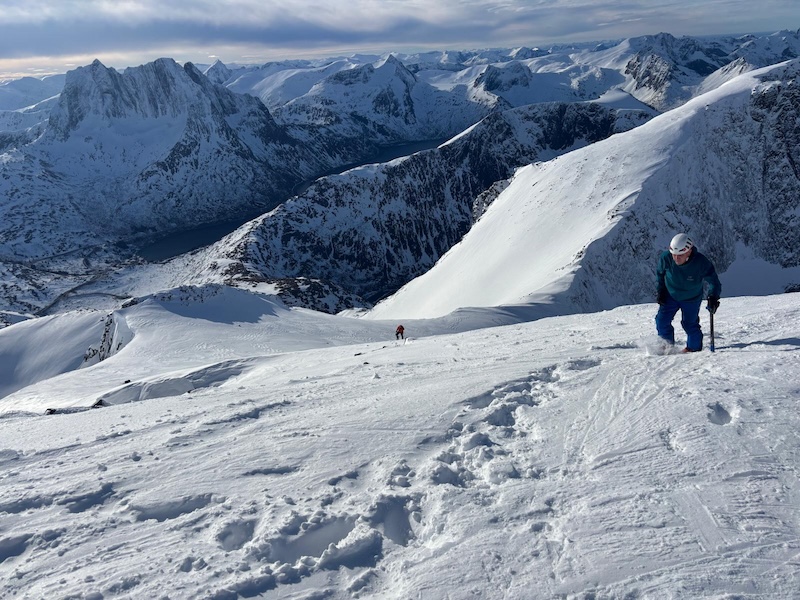
From afar, the face of Keipen looks very steep and I wasn’t sure I fancied a traverse to gain the ridge. But, in the end it turned out to be quite manageable.
When required, we used ski crampons to give confidence although there was a long section in the middle that was much more easy going and we basked in sunshine.
I did make the ridge but I didn’t get right to the top of Keipen. This required boot crampons for the last section and I wish, in hindsight, I’d pushed onwards. I confess I felt a bit exposed on the ridge with steep drops on each side and my fear got the better of me. It was all I could do to transition to skiing from skinning and then head off the ridge for a steep ski downhill.
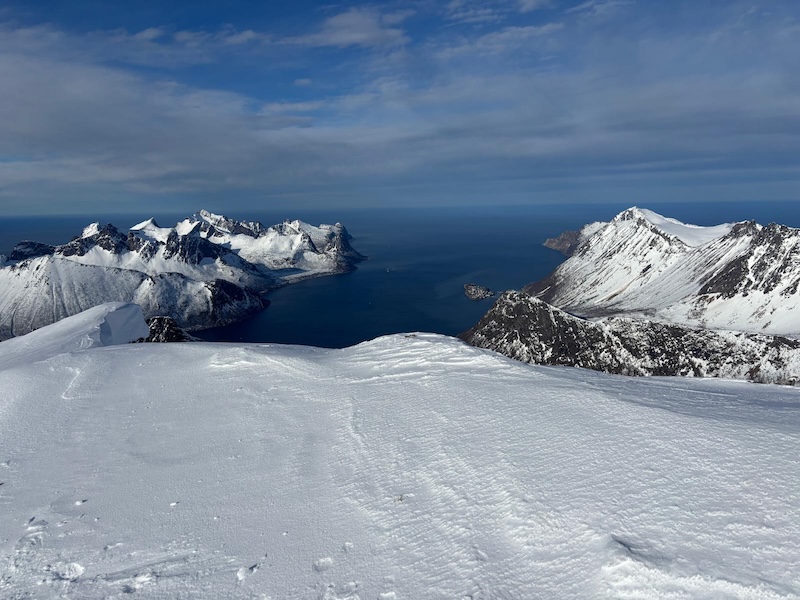
When I saw the views (in photos) from the other side of the mountain, over the island coast and sea, I was very impressed. Next time, I will make it to the summit and perhaps that is the incentive for a return trip to Senja, but for summer hiking.
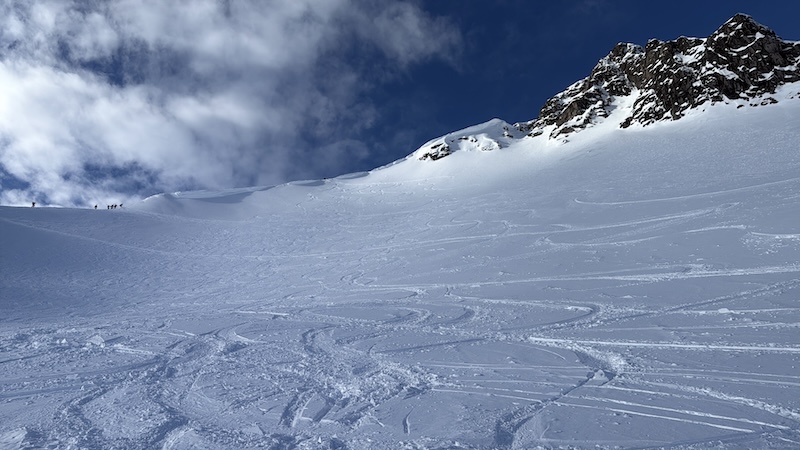
Skiing downhill on Keipen was amazing. The first slope was steep but the snow was good. As we continued further downhill we hit tougher conditions. The unusually warm temperatures made some of the snow “spring slushy” but, overall, it was generally good for off-piste skiing in March.
Again, I’d thoroughly recommend this route but beware of avalanche potential, especially the steep face of Keipen.
Skolpan
Starting point: Krokelvdalen. Park on Fv.862
Distance: Around 6km to 7km total
Total ascent: Around 600m
Highest point: 779m
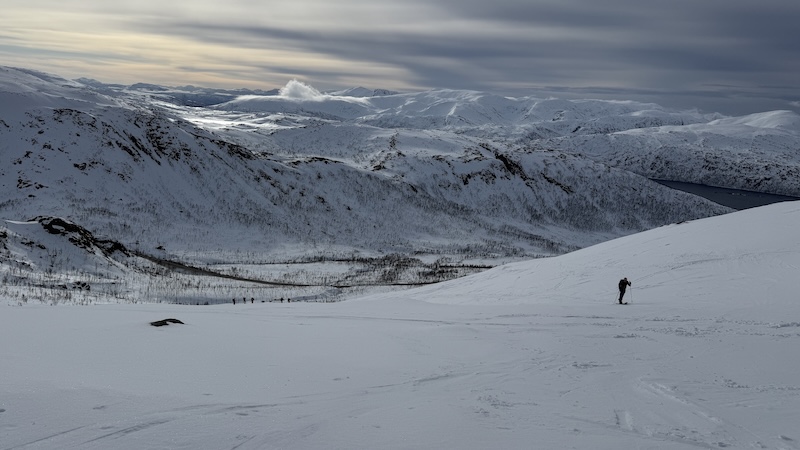
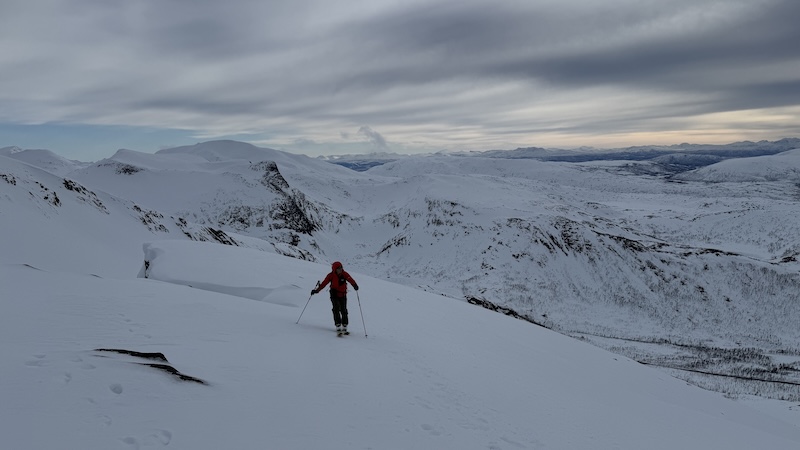
Skolpan is another “great value” mountain with fantastic views for a fairly short ski tour. We enjoyed more sunshine although conditions started to dull later in the day.
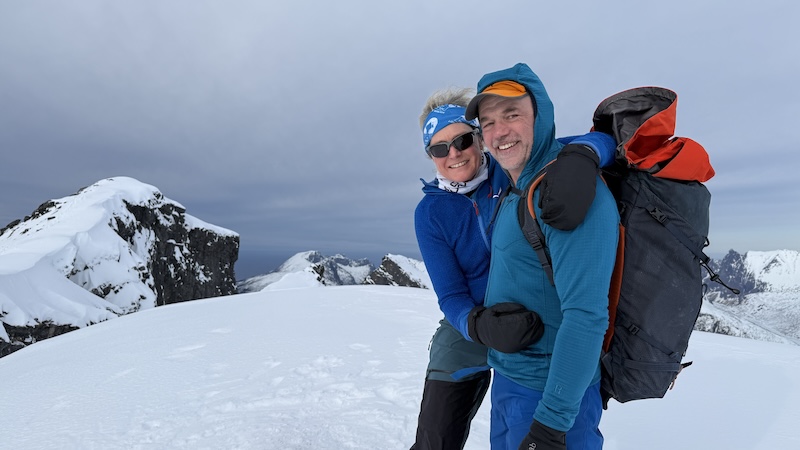
The gradients were not too challenging and it felt like we reached the mountain ridge quite quickly. The final section to the summit required a bootpack with crampons, first descending a little before hiking up a narrow ridge spur covered in snow. Again, I opted to sit tight a little below and watch as a few others, including Hubby G, went for it.
I am somewhat fearful of ridges covered in snow for obvious reasons. I am sure that those who went to the summits were as safe as they could be with boot crampons and an ice axe etc but I still didn’t fancy the risk. Sometimes I do wish I had a better head for heights, yet I still greatly enjoyed the ski touring in Senja’s mountains.
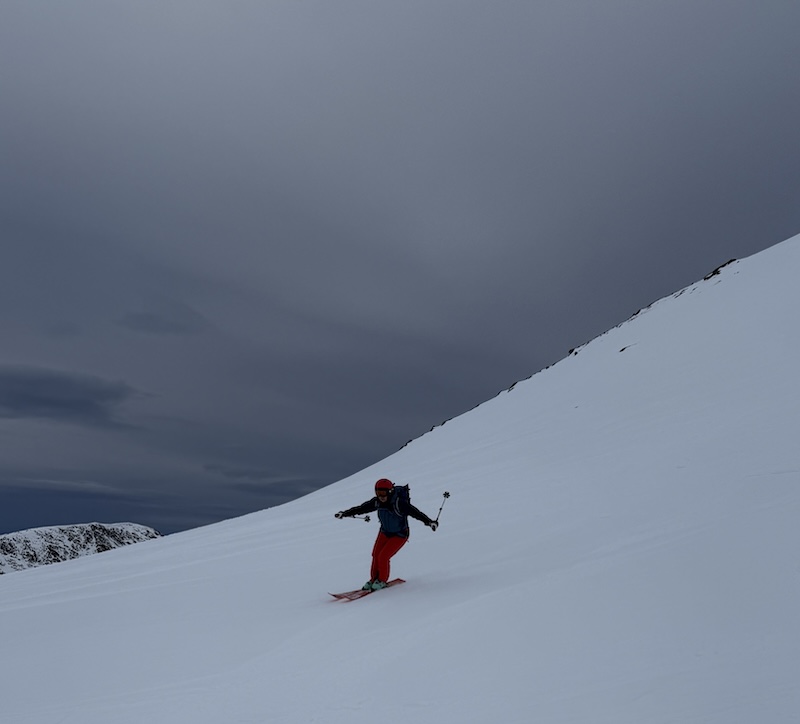
The ski back down was on snow of mixed conditions. Off-piste skiing in Norway is rather like Scotland, although there was more snow cover in Norway. The snow can be light and fluffy but also icy and wet and heavy. We had most of this on the way back to the roadside, but we all agreed it was a good wee ski tour.
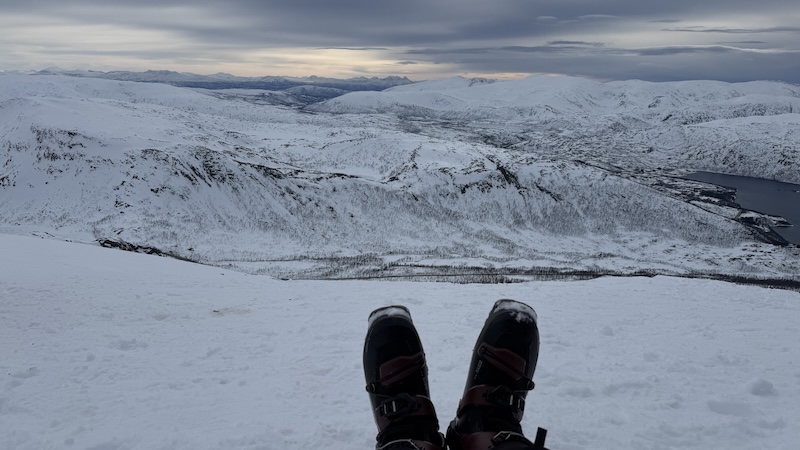
Other things to know about ski touring in Norway
The weather is unpredictable: It can be cold – and it can be warm. It might be sunny, snowy or rainy. You need to be prepared for all kinds weather. There also might be a few great days and then a few awful weather days. This happened to us. Planning a trip for a longer timeframe, such as 10 days, allows for variances in weather.
Be flexible: On the better weather days, go further and longer. On days when there is a shorter weather window, pick a shorter route or don’t travel so far. There is plenty of choice on Senja. Have a Plan B if Plan A doesn’t work out.
A wider weather window: Given the remoteness and coastal Arctic weather, an optimal ski touring holiday length is 10 days to two weeks to allow for travel and bad weather non-skiing days.
Plan for a dual location: A dual location trip over 10 days gives greater flexibility with, for example, five days in coastal mountains and five days inland.
You don’t need to get to the top: The journey is a large part of a ski tour. Some people have a need to get to the summit but if you are fearful of ridges, or the clouds close in, it’s not vital to reach the highest point. You could, for example, enjoy a few laps lower down the slope on better snow and in sunshine.
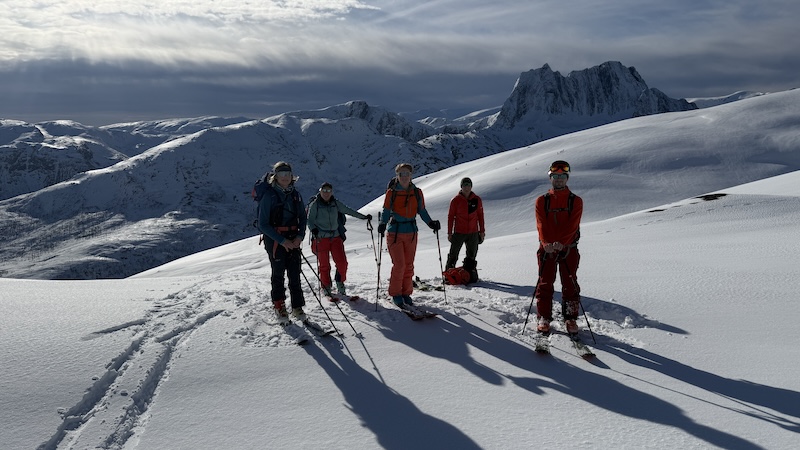
This is not piste skiing: The snow is not groomed and while it might be fresh powder at times, you will likely come across snow of all types, from ice to fluffy stuff.
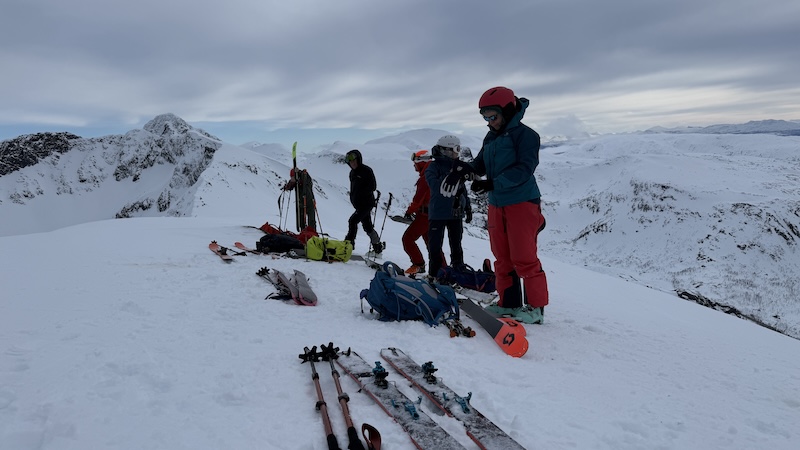
Quicker transitions allow you to stay warmer: After a long skin uphill, you will be sweaty. Once this sweat starts to dry, your body temperature will quickly fall. It’s important to put on an extra layer – for example, an insulated jacket – and work quickly to swap your ski equipment from uphill to downhill.
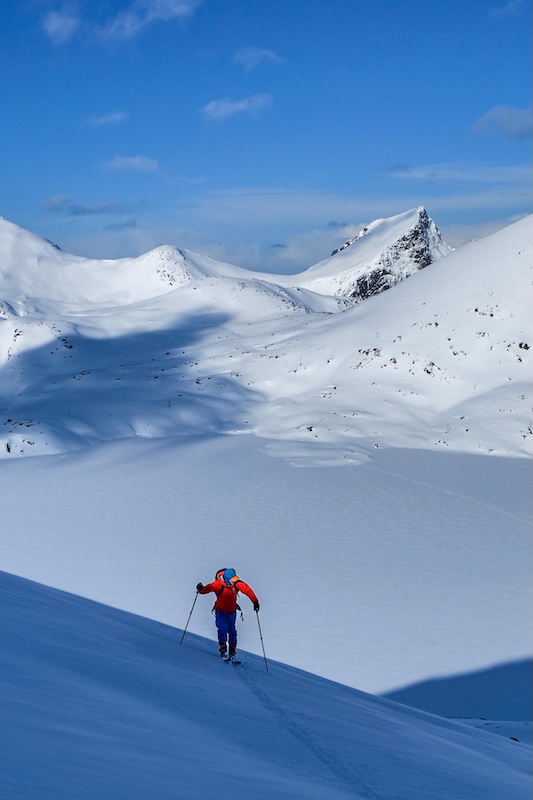
Look over your shoulder: When skinning uphill, you are looking in one direction and usually up a mountain slope. Take the time every so often to stop and look behind you for wider views especially if they are over the coast and sea.
Choose your ski friends wisely: The right friends can make or break a holiday. The best holiday pals are fun, calm, experienced at skiing and have a similar pace and aspirations. They also need to be like-minded because you will be spending a lot of time with them while not skiing. Hubby G and I got very lucky with the group that we travelled with.
Take lots of photos: I have a poor memory but I like to remember my trips and adventures so I take lots of photos. Having a big file of pictures allows me to look back at great memories and good times.