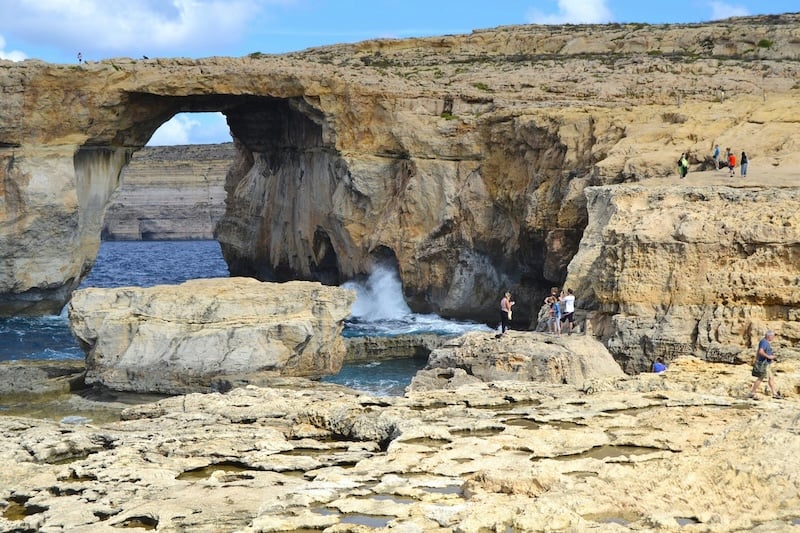
Gozo is not a large island, although it is the second-largest island in the Maltese archipelago, located in the Mediterranean Sea, south of Sicily and northwest of the main island of Malta. You can cross the island in 20 minutes by car and the whole island covers about 67 square kilometres. What the map doesn’t show is that the terrain packs in more variety than islands three times its size. Plus, a surprising amount of the best ground is reached by tracks that do not appear on any map you can buy at the ferry terminal.
Gozo boasts cliffs, gorges, coastal caves, clear sea waters and so much more.
The coastline
The Ta’ Ċenċ cliffs in the south of the island are the main draw for walkers. They rise to more than 130m above the sea and the plateau top is bare limestone scattered with wild thyme and Mediterranean garrigue. The cliff edge is unfenced, which Scottish hillwalkers will find refreshingly familiar. Views south to Comino and Malta on a clear day. Sunset up here with a bottle of local wine and some cheese from Victoria is one of the better evenings I have had anywhere in the Mediterranean.
From Xlendi Bay there is a clifftop path running east toward Ta’ Ċenċ that takes around 90 minutes at a steady pace. The route passes above sea caves and along sections of exposed cliff. It is not waymarked particularly well. A GPS track or a good map is worth having if you do not want to spend time backtracking.
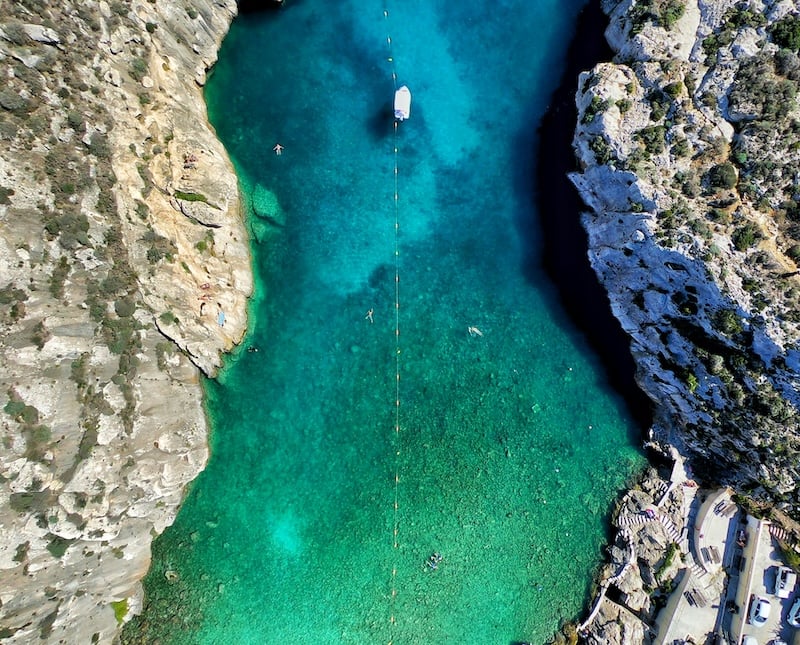
Wied il-Għasri on the north coast is a narrow gorge leading down to a tiny pebble beach enclosed by high rock walls. The walk down is short and steep. At the bottom the swimming is excellent if the sea is calm, though the inlet faces north and can be rough. I went on a still morning and had it entirely to myself, which felt unlikely for somewhere this beautiful.
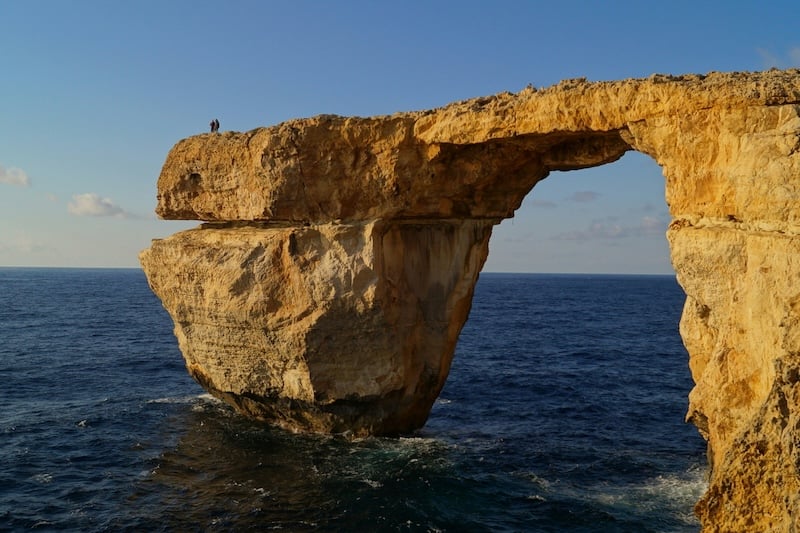
Wied il-Mielaħ nearby is a natural arch on the northwest coast, reached by a short walk from the road with steps down to the shoreline. It gets a fraction of the visitors that the now-collapsed Azure Window used to attract. The views from below the arch are excellent and it is usually quiet even when the main tourist spots are busy.
Diving and swimming
Gozo has a reputation among divers that seems out of proportion to its size. The Blue Hole at Dwejra on the west coast is one of the most highly rated dive sites in Europe, a natural rock formation with an underwater arch leading out to open water, with visibility that regularly exceeds 30 metres. I am not a diver but the people I spoke to who are were emphatic about it.
For swimming without equipment, Gozo has more options than you would expect. Ramla Bay on the north coast is the main sandy beach, with unusual reddish-gold sand, Blue Flag certification and a gradual entry into the water. San Blas Bay near Nadur is reached by a steep path and is one of the more secluded beaches on the island, worth the walk down and the somewhat less enjoyable walk back up. The rocky platforms below the Xwejni salt pans have clear deep water accessible directly from the rocks.
The salt pans themselves are still harvested by hand between May and September by a family operation called Leli tal-Melħ. There is a small shop nearby where bags of sea salt start at around €2.50. I have bought them as gifts more than once.
Getting to the wilder ground
This is where Gozo gets interesting for anyone used to spending time outdoors, and also where the logistics get slightly awkward.
Buses exist and they cover the main towns, but every route passes through Victoria in the middle of the island, which means getting from one coastal spot to another involves going back to the centre and waiting. On a day trip where time is limited this is frustrating. A hire car gets you to the paved roads but a lot of the terrain that outdoor visitors actually want to reach, the cliff paths, the gorge approaches, the rougher sections of coastline, is on tracks that a standard rental finds difficult.
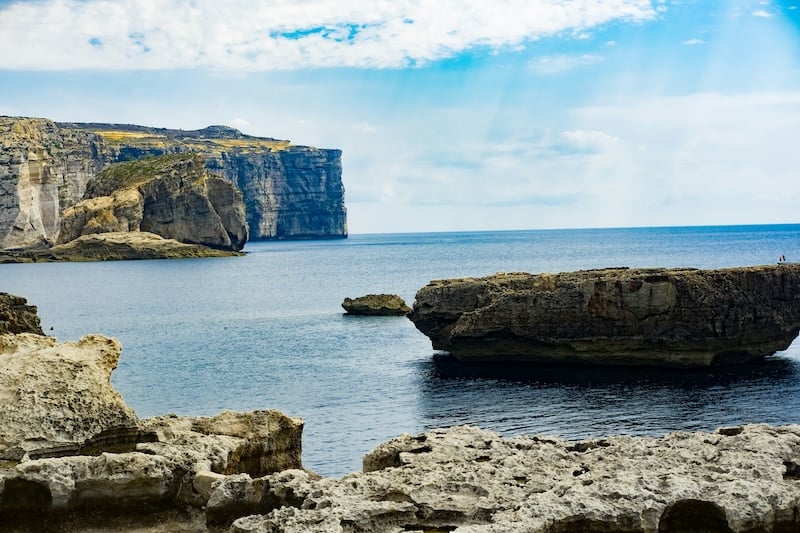
Quad bikes tours solve this neatly. Guided full-day tours take small groups in convoy through back roads and coastal tracks, stopping at places like the Ta’ Ċenċ cliffs, the Xwejni salt pans, Dwejra Bay with the Inland Sea and Fungus Rock, and smaller coastal spots with no signage or formal access. The tours include transport from Malta, a private boat crossing, lunch and a return cruise past the Blue Lagoon and Comino’s sea caves. For covering ground that other vehicles cannot manage, they are genuinely practical rather than just a novelty.
You can also hire a quad independently from operators on the island if you prefer to set your own route. Riders must be 21 or over and hold a valid driving licence. This gives full control over your itinerary, which is useful if you want to reach specific walking or swimming spots that guided tours do not cover.
Rock climbing and kayaking
Mġarr ix-Xini, a sheltered inlet on the south coast, is used as a base for both shore diving and rock climbing, with routes established on the valley walls at a range of grades. Gozo Adventures, a local operator, runs guided climbing sessions. Coasteering along the rocky shoreline is also available through several operators and is a good option for experiencing the coast from water level.
Sea kayaking along the coastline is one of the better ways to see caves and inlets that are inaccessible from land. Guided trips run from several points around the coast, with the Dwejra area and the south coast being the most popular routes. In calm conditions the water clarity from a kayak is something else.
Practical details
The Ċirkewwa ferry from Malta runs up to 74 times daily, takes 25 minutes and costs €4.65 return for foot passengers. You pay on the return journey from Gozo, not on the way there, which confuses almost everyone the first time. Fast ferries also run from Valletta (45 minutes, from around €6-7.50) and from May 2026 from Sliema and Buġibba (around 30 minutes).
The best months for outdoor activities are May, June, September and October. July and August regularly hit 33-35°C and shade on the coastal paths is limited. Sea temperatures stay swimmable well into November.
Gozo is small enough to cover a lot of ground in a single day but staying overnight allows for early starts and evening walks along the cliffs. The island feels noticeably different once the day-trippers have gone back on the ferry. If you can give it a night, do.