The Camino de Santiago draws thousands of pilgrims, history lovers and outdoor enthusiasts to northern Spain every year. This historic trail terminates at the Cathedral of Santiago de Compostela. Many hikers choose the popular Camino Francés. This specific path starts in St. Jean-Pied-de-Port. The route covers approximately 800km of diverse terrain and typically takes 30 to 35 days to complete. Walkers who finish the final 100 km may claim the Compostela, a certificate of completion issued by the Cathedral. The journey demands physical endurance and mental fortitude, and long days on the trail test the resolve of every participant.
Mental Preparation Through Guidance
Appropriate shoes and a light backpack are necessary to physically prepare you for hiking. But psychological preparation is no less challenging. Some hikers need a certain clarity of mind to prepare for a journey that is as much inward as it is physical.
Pilgrims approach this preparation differently. Some consult a sports psychologist to build mental stamina for repetitive daily exertion. Others study Stoic philosophy—a natural pairing with a journey centred on simplicity and endurance.
Some turn to digital intention-setting tools: Asknebula, for example, is a spiritual app that uses reflective prompts and intuitive readings to help users clarify what they’re seeking before a major life undertaking.
Whatever your approach, the Camino de Santiago will deliver in more ways than you might expect.
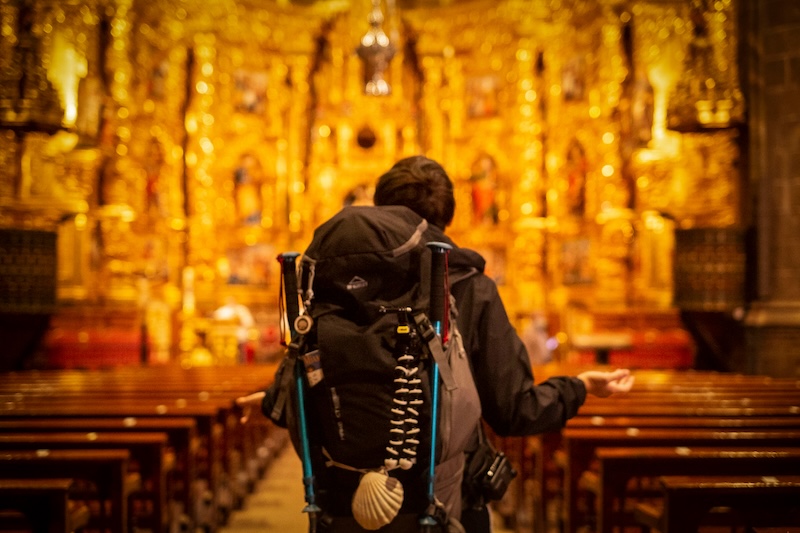
5 Reasons to Walk the Camino de Santiago
Most people choose the Camino de Santiago to challenge themselves physically, or to explore the religious side of this destination. The route offers unique encounters unavailable elsewhere.
1. The Pre-Roman Architecture of O Cebreiro
The chance to inhabit ancient Celtic history directly compels history enthusiasts to climb into the Galician mountains. Visitors specifically seek out this high-altitude (approximately 1293m) settlement to observe traditional pallozas, circular stone residences with thick walls and conical thatched roofs. Modern trekkers also enjoy the opportunity to consume hot Caldo Gallego soup inside these robust structures.
The thick edifices provide crucial shelter from sudden mountain storms and bitter winds. This stark contrast to modern urban comfort attracts individuals who desire authentic historical immersion. The careful preservation of these stone huts allows participants to step out of the contemporary world entirely. The promise of this unique cultural exposure turns a brutal physical climb into a highly anticipated milestone.
2. The Psychological Test of the Meseta
The pursuit of extreme mental fortitude draws psychological truth-seekers to the vast plateau between Burgos and León. This approximately 200km stretch of ochre wheat fields lacks shade completely and presents a severe environmental challenge. Walkers deliberately choose this specific segment of the ancient Roman road (the Via Aquitania, which the Camino Francés follows here) to confront absolute silence.
The profound monotony of the treeless Meseta breaks the human reliance on constant visual stimulation. This intentional deprivation of sensory input is a magnet for travelers looking for a serious internal reset from the hectic routines of modern life. The vast emptiness is an intense reflection of one’s inner musings, making this one-of-a-kind mental challenge a truly life-changing experience.
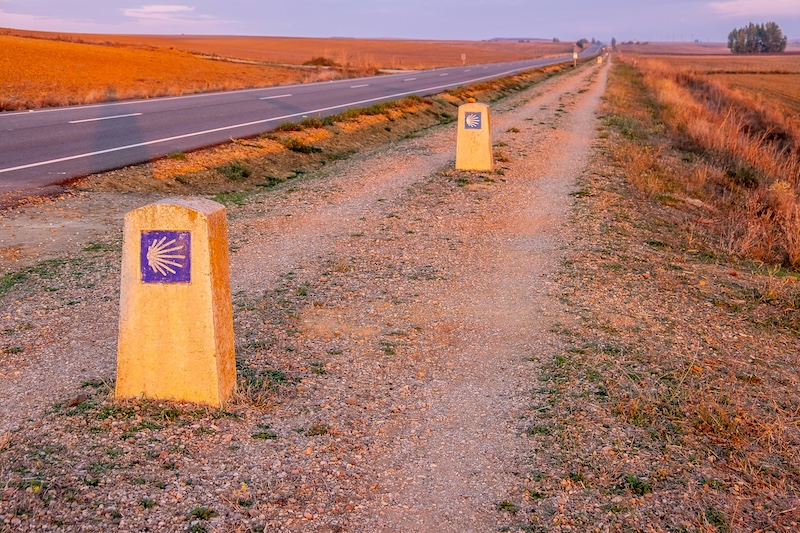
3. The Kinetic Ritual of the Botafumeiro
The promise of a one-of-a-kind sensory experience in the Cathedral of Santiago de Compostela is enough to motivate numerous adventurers to finish the main pilgrimage. Hikers endure incredible foot pain just to see the famous Botafumeiro swinging.
This massive silver incense burner weighs 53 kilograms and commands the attention of every weary traveler. Eight specialized men, known as tiraboleiros, propel the heavy metal vessel across the transept, creating a spectacular kinetic display. The tradition of swinging incense at this altar dates to the 11th century, when it was used to mask the smell of exhausted pilgrims. the current silver censer was made by goldsmith José Losada in 1851. It swings on 12 liturgical feast days per year—including Easter, 25 July (Feast of Saint James), and Christmas—and can be arranged privately by contacting the Cathedral in advance.
Today, this profound visual impact captivates modern observers. Thick, pine-scented smoke from lit charcoal spills into the massive stone interior. The resultant heavy haze provides a powerful emotional climax to the long continental journey. The sheer physics of this pendulum offers a deeply memorable conclusion to weeks of physical hardship.
4. The Crustaceans of the Costa da Morte
The allure of a rare culinary adventure compels many walkers to extend their route westward to Cape Finisterre via the Camino Finisterre, a waymarked 90 km extension of the main route. The rugged Galician coast attracts food enthusiasts who desire fresh percebes. Hikers specifically undertake the extra kilometers to consume this regional delicacy straight from the sea.
Local cooks boil the percebes briefly in ocean water to preserve the authentic flavor. Diners twist the tubular shell to extract the tender meat inside. The sharp iodine-rich taste provides a welcome contrast to the heavy pork diet of the inland route. The Romans once called this exact location the end of the world, and modern explorers still seek out the final seaside feast.
5. Unpolluted Celestial Observations
The opportunity for pristine astronomical observation draws thousands of nature lovers to the rural stretches of the Camino Franés. Medieval legend held that the Milky Way pointed pilgrims westward toward the ocean, earning the route the name Way of St. James long before Santiago’s Cathedral was built.
Modern trekkers covet these pristine night skies to find a deep connection with the universe. A sudden flash of a meteorite often prompts intense personal contemplation amid a pre-dawn departure. A reflective walker might wonder, what does it mean spiritually to see a shooting star on a profound physical journey? The sheer volume of visible constellations turns the dark sky into an accurate map of Orion and Ursa Major.
These silent stellar companions put the human scale into absolute perspective. The nightly cosmic display provides a compelling reason to abandon bright city lights for quiet rural paths.
Conclusion
The Camino Francés, starting in St. Jean-Pied-de-Port and covering 800 km to Santiago de Compostela, typically takes 30–35 days. The best walking seasons are May–June and September–October, when temperatures are moderate and the trail less crowded. Walkers who complete the final 100 km receive the Compostela certificate from the Cathedral. Whether you’re drawn by the pre-Roman pallozas of O Cebreiro, the psychological gauntlet of the Meseta, the spectacle of the Botafumeiro, the seafood of the Galician coast, or the unpolluted night sky above the plateau, the trail will meet you where you are.