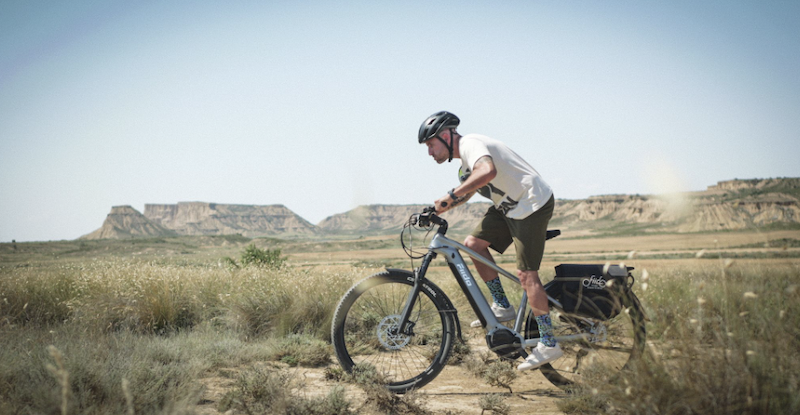
A multi-day cycling trip offers a slower and more immersive way to explore Britain. Quiet country lanes, coastal roads, forest tracks and small towns can become part of the journey rather than scenery viewed through a car window.
Electric assistance can make longer distances and repeated climbs accessible to more riders, but it does not remove the need for careful planning. Battery use, charging opportunities, luggage weight and changing weather all become more important when the ride lasts several days.
A successful first tour should therefore be designed around realistic daily distances rather than the longest range shown on a specification sheet.
Plan the Route Before Choosing the Daily Distance
It is tempting to divide the total mileage by the number of available days. However, 40 miles across flat roads is very different from 40 miles through the Scottish Highlands, the Lake District or rural Wales.
Review the route for:
- Total climbing
- Road and trail surfaces
- Distance between villages
- Food and water stops
- Accommodation
- Railway stations or alternative transport
- Bicycle access restrictions
Leave enough time for photographs, mechanical problems and unexpected diversions. A first tour should feel like an outdoor holiday rather than a race against the battery indicator.
It is also sensible to plan at least one shorter day. This gives the rider flexibility if poor weather, tiredness or a delayed start affects the schedule.
Treat Advertised Range as a Starting Point
An e-bike’s maximum stated range is usually achieved under controlled test conditions. Real touring range will change according to rider weight, luggage, gradients, wind, temperature, tyre pressure and assistance level.
A heavily loaded bike climbing into a headwind may use energy much faster than the same bike on a flat summer cycle path.
Before the tour, complete a fully loaded test ride on similar terrain. Record how much battery remains after a known distance and use that result to estimate a realistic daily range.
Avoid planning to arrive with an almost empty battery. A reserve provides flexibility for missed turns, extra climbing or an unavailable charging point.
Build Charging Into the Itinerary
Charging should be planned with the same care as accommodation. A removable battery is particularly useful because it can be carried into a hotel room or other approved charging location while the bike remains securely stored. Always use the correct manufacturer-supplied charger and ask the accommodation provider before charging indoors.
Do not assume that every café, campsite or railway station will provide a suitable socket. Contact overnight stops in advance and identify a backup option where possible.
Riders covering longer distances may prefer a bike that supports an additional battery. However, extra batteries add weight and take up luggage space, so their value depends on the distance between reliable charging points.
Choose a Bike for the Terrain, Not Just the Battery
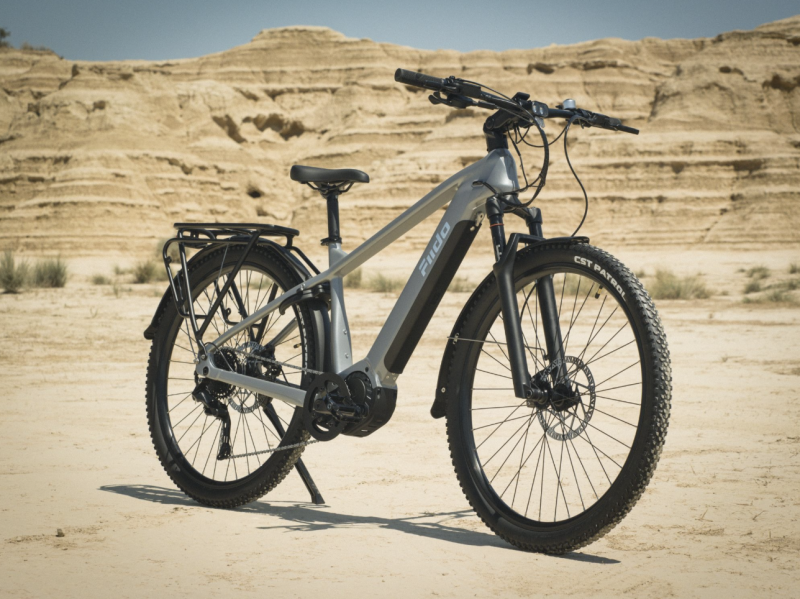
A suitable electric touring bike needs more than a large battery. Comfort, braking, gearing, luggage capacity and stability all affect the experience after several hours in the saddle.
Useful touring features include:
- An upright or relaxed riding position
- Multiple gears for changing gradients
- Hydraulic disc brakes
- Front suspension for rough surfaces
- Mounting points for racks or bags
- Removable batteries
- Wide, puncture-resistant tyres
- Integrated lights and mudguards
A bike designed mainly for smooth urban journeys may be efficient on roads but less comfortable on forest tracks. A heavy fat-tyre model may offer stability and load capacity, but it will be harder to lift into accommodation or on to some trains.
Pack Light, but Prepare for British Weather
Every additional kilogram affects handling, braking and energy use. Pack around the conditions you are likely to encounter rather than filling every available bag.
Useful items include:
- Waterproof jacket and overtrousers
- Insulating layer
- Gloves
- Basic first-aid kit
- Spare inner tube or repair kit
- Tyre levers and compact pump
- Multi-tool
- Charger and battery keys
- Front and rear lights
- Power bank
- Water and emergency snacks
Keep heavier items low and evenly distributed. Test the loaded bike before departure to make sure bags do not interfere with the wheels, brakes or pedalling.
Waterproof inner bags can be useful even when panniers are described as weather-resistant. British rain often finds its way through zips and seams during a long day.
Fiido Options for Different Touring Styles
Fiido’s touring range illustrates how different designs suit different journeys.
The Fiido Nomads Pro is aimed at hillier and more demanding tours. It combines a UK-compliant 250W mid-drive motor with 100Nm of torque, a nine-speed Shimano CUES drivetrain, a 120mm air-suspension fork and four-piston hydraulic brakes. Its standard battery has a stated range of about 75km, while the expandable battery setup increases the claimed maximum to approximately 225km under test conditions.
The Fiido Nomads offers a more conventional trekking setup for mixed roads, gravel paths and everyday riding. It uses a removable 417.6Wh battery, nine-speed gearing and a standard stated range of approximately 79km. Its optional multi-battery arrangement is intended for riders who need more flexibility between charging stops.
For rougher routes and heavier luggage, the Fiido Titan uses 26-by-4-inch tyres, four-piston hydraulic brakes and a total payload rating of almost 200kg. Its standard stated range is 115km, although its size and weight make it better suited to riders who prioritise stability and carrying capacity over easy transport.
These figures should be treated as comparison points rather than guaranteed touring distances. Terrain, weather, rider weight and luggage can change the result considerably.
Check That the Bike Is Legal for UK Roads
An electrically assisted pedal cycle used like a conventional bicycle in Great Britain must have working pedals, a motor with a maximum continuous rated output of 250W and assistance that stops at 15.5mph. The rider must be at least 14 years old.
A compliant EAPC does not require vehicle registration, road tax or a driving licence. Bikes that do not meet these conditions may be treated as motor vehicles and require different approval and documentation.
Check the specification of the exact UK model rather than assuming that versions sold in other countries have the same motor and speed settings.
Complete a One-Night Practice Tour
Before committing to a week-long journey, plan an overnight ride close to home.
Use the same bags, clothing and assistance settings intended for the longer trip. This will reveal practical problems that are easy to miss on a short leisure ride, including saddle discomfort, rattling luggage, slow charging or an unrealistic daily mileage target.
It also allows the rider to learn how the loaded ebike handles when starting on a hill, braking on wet roads or moving at low speed.
Enjoy the Journey Between Destinations
Electric touring is not about using maximum assistance to cover the greatest possible distance. Its real advantage is helping riders manage hills, luggage and consecutive days while still experiencing the landscape from a bicycle.
Choose achievable distances, test the loaded bike, confirm where charging is permitted and keep enough energy in reserve for changes of plan. With those details settled, a multi-day e-bike tour can become a comfortable and memorable way to explore the UK.