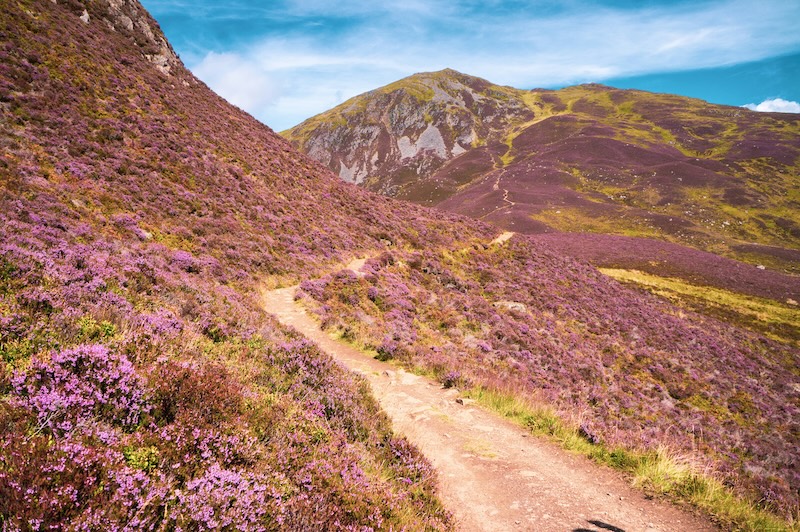
There is something appealing about reaching a woodland trail, moorland path, or rocky bridleway and choosing how to experience it. You can walk, cycle, run, ride an e-bike, use a mountain bike, or, on suitable private terrain, explore with an electric scooter.
As outdoor recreation continues to grow in the UK, trails are being used by a wider range of people and vehicles. Hiking remains hugely popular, while cycling continues to attract people looking for longer and more active ways to explore the countryside.
This raises an important question: How does your choice of transport change the outdoor experience? Walking, mountain biking, e-bikes, and off-road electric scooters each offer different advantages, limitations and ideal environments.
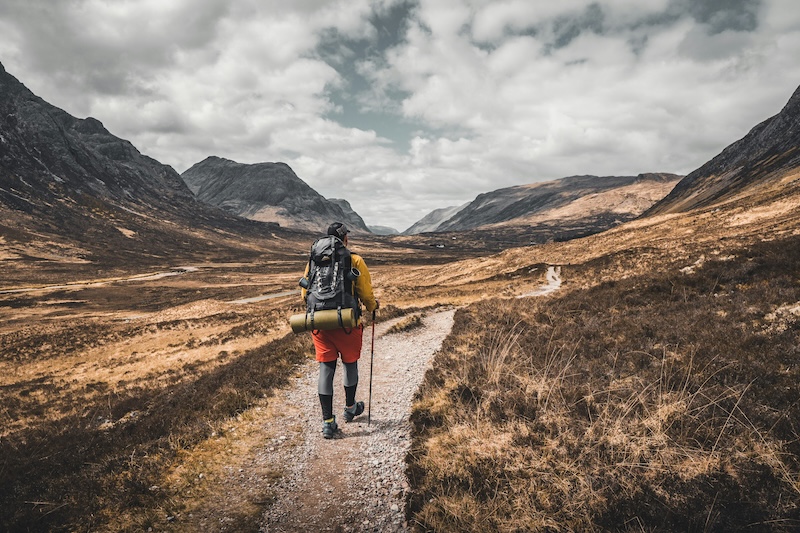
Walking: The Original Trail Experience
Walking remains the simplest and most immersive way to experience a trail. At a slower pace, you can notice changes in the ground beneath your feet, hear nearby streams and birds, and take in details across the landscape that can easily be missed at higher speeds.
Walking also requires no specialised equipment and gives you access to a broad range of public routes. However, distance, time, fitness, and gradients can limit how much ground you can realistically cover in a day.
For older people, people with limited mobility, or anyone with restricted time, some longer or more challenging sections of Britain’s trail networks may simply be difficult to reach on foot.
Walking therefore provides exceptional depth of experience, but its slower pace can limit the overall distance and variety of terrain you can explore.
Mountain Biking: Speed, Skill, and Immersion
Mountain biking introduced a different way to experience Britain’s trails. Instead of moving slowly through the landscape, riders can cover significant distances while dealing with technical terrain, climbs, corners, roots, rocks and changing surfaces.
Speed changes how the landscape is experienced. A rider travelling through technical singletrack must focus closely on the trail ahead, selecting lines and managing braking, balance, and body position.
The reward is a combination of physical effort, technical skill, and excitement. An experienced mountain biker can cover considerably more ground in a day than a walker, making distant parts of a trail network easier to reach.
The trade-off is that fast riding can reduce the opportunity to stop and observe the surrounding environment. Mountain biking is therefore a different form of outdoor immersion rather than simply a faster version of walking.

The E-Bike: Assisted Range and Wider Access
Electric mountain bikes have changed who can comfortably access challenging trails. Motor assistance reduces the physical effort required for climbs, allowing riders to travel farther and tackle terrain that might otherwise be beyond their fitness level.
Modern trail-ready e-bikes combine electric assistance with strong brakes, suitable tyres, suspension, and batteries designed for longer rides. This makes them useful for riders who want to explore large areas without the same physical demands associated with conventional mountain biking.
E-bikes can also make group rides more accessible. People with different fitness levels can travel together without the stronger riders having to wait constantly for others on difficult climbs.
There are still differences between e-MTBs and conventional mountain bikes. E-bikes are generally heavier, and the motor changes the experience of climbing. However, their ability to extend riding range and reduce physical barriers makes them an increasingly important part of outdoor recreation.
In the UK, EAPC-compliant e-MTBs with a maximum continuous motor power of 250W and assisted speed limited to 15.5 mph are treated similarly to conventional bicycles for access purposes. They can be used where bicycles are permitted, including suitable bridleways and byways.
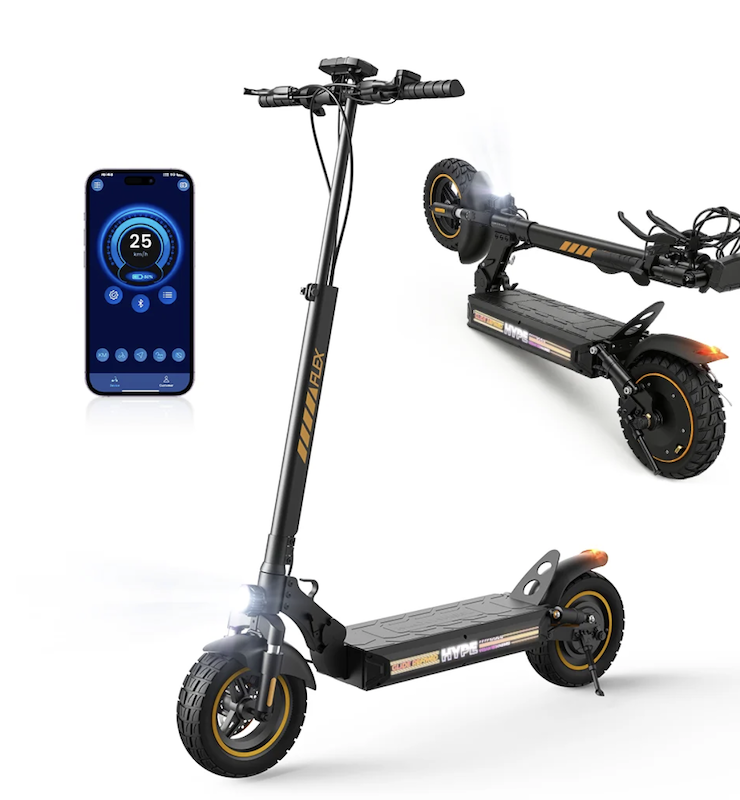
The Off-Road Electric Scooter: A Different Trail Proposition
The off-road electric scooter offers another approach to outdoor exploration. Unlike a bicycle, it is ridden standing up, creating a more direct physical connection between the rider and the terrain.
The rider can feel changes in the trail through the deck while using body movement to maintain balance. The upright position also provides a field of view that is closer to the experience of walking than seated cycling.
Purpose-built off-road electric scooters generally use larger pneumatic tyres, suspension, and strong braking systems to handle uneven surfaces. Depending on the model and conditions, they can cover considerably more distance than walking while requiring less physical effort.
This combination can make an off-road scooter useful for riders who want to explore more ground without committing to the physical demands of long-distance hiking or traditional mountain biking.
It can also provide an alternative for mixed-ability groups. People who may struggle with steep gradients or extended walks can potentially explore suitable terrain with less fatigue.
However, the experience depends heavily on using an appropriate model on appropriate terrain. Rough trails, loose surfaces, and changing gradients require attention, balance, and responsible riding.
Where Each Transport Mode Belongs
The right vehicle depends on both the terrain and the access rules governing the route.
Legal Access
Walking has the widest access of the four options. Walkers can use footpaths, bridleways, restricted byways, byways open to all traffic, and appropriate areas of open-access land.
Mountain bikes and compliant e-MTBs can generally be used on bridleways, byways, and routes specifically designated for cycling. They are not normally permitted on public footpaths.
Non-EAPC privately owned electric scooters have much more restricted access in the UK. They are generally limited to private land, dedicated off-road parks, estates, farms, and other suitable areas where the owner permits their use.
Because regulations can change and access conditions differ between locations, riders should always check the current rules for the specific route or property before riding.
Terrain Suitability
Different environments naturally suit different transport modes.
Open private land and dedicated off-road parks can be suitable for off-road electric scooters, particularly where surfaces range from compact dirt to gravel and grass.
Forest roads and wider gravel tracks can work well for both e-MTBs and suitable scooters where access is permitted.
Technical singletrack remains particularly suited to mountain bikes because their wheel size, geometry, and handling are designed for narrow and constantly changing terrain.
Canal towpaths and disused railway trails can also provide relatively accessible riding environments for bicycles and, where permitted, suitable electric scooters.
Trail Etiquette and Shared Spaces
As more people use outdoor routes, sharing trails responsibly becomes increasingly important. Walkers, cyclists, horse riders, and electric scooter users may encounter each other on suitable routes and private recreational areas.
Basic trail etiquette remains straightforward: slow down when visibility is limited, give other users adequate warning before passing, respect walkers and horse riders, and avoid damaging the trail surface.
Electric assistance should not remove the need for awareness. Riders should adjust their speed to the conditions and understand the limitations of their vehicle.
Responsible use helps ensure that increased access does not come at the expense of other users or the environment.
Choosing Your Mode: What the Trail Asks of You
The best choice depends on the experience you want and the terrain you intend to explore.
If your priority is close observation, quiet exploration, and maximum sensory connection with the landscape, walking offers a unique experience.
If you enjoy physical challenge, speed, technical riding, and longer distances, a conventional mountain bike may be the natural choice.
An e-bike can provide similar cycling experiences while reducing the physical demands of difficult climbs and longer rides.
For people looking for accessible range, an upright riding position, and a different way to explore suitable off-road environments, an electric scooter can provide another option.
For UK riders interested in exploring this type of transport, the range of off-road electric scooters at iHoverboard includes models designed for different levels of off-road riding.
The Bigger Picture: More People, More Trails, More Possibilities
The growing variety of trail transport reflects the changing nature of outdoor recreation. More people are looking for ways to experience Britain’s countryside, and different forms of transport can help people with different abilities, fitness levels, and preferences participate.
The important thing is not simply how quickly you reach the end of a trail. It is how responsibly you use the route, respect other users, and engage with the landscape.
Whether you choose boots, pedals, or a scooter, the goal remains the same: getting outside and experiencing the natural environment.
The wheels may be changing, but the wilderness remains. Walk it. Ride it. Roll it. Just get out there.