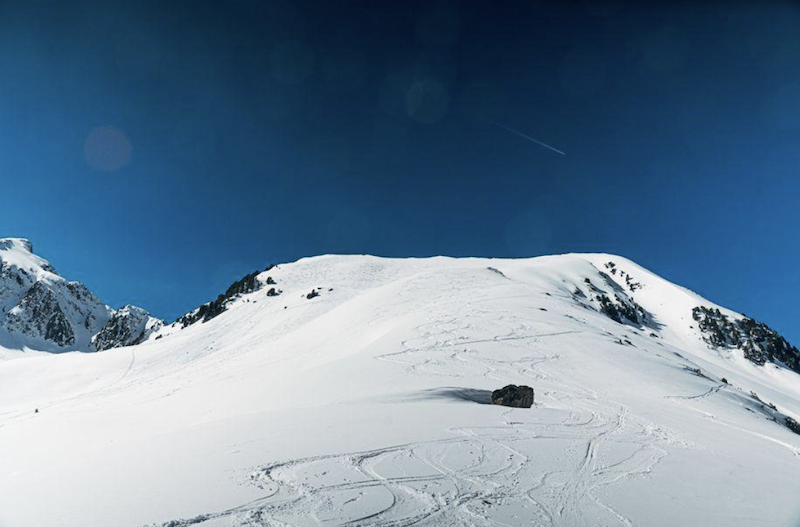
Imagine standing at 3230m, surrounded by glacier-carved ridges, with more than 600km of interconnected slopes stretching below you. That’s the reality of Les 3 Vallées, the world’s largest linked ski area, where seven resorts share terrain between 1100 m and 3230m altitude. Most skiers return to the same familiar runs season after season. They rarely venture beyond their home valley.
Hidden across this vast domain are 10 high-altitude summits, each accessible by lift and each offering unique panoramas and descents that most visitors never experience. Méribel sits at the geographic heart of the entire area, making it the perfect base camp for anyone determined to tick off every peak.
This guide ranks those 10 summits from tallest to shortest. You’ll find practical, lift-by-lift directions to reach every single one, along with tips to make your peak-bagging adventure as smooth as possible.
Why the 3 Valleys Ski Pass Unlocks More High-Altitude Terrain Than Anywhere Else?
A staggering 85% of the ski area sits above 1800m and 25 summits are lift-accessible, including 11 above 2500m. No other connected resort in the world matches that concentration of high-altitude skiable terrain. Grabbing an Official 3 Valleys ski pass gives you seamless access to all seven resorts (Méribel, Courchevel, Val Thorens, Les Menuires, Saint-Martin-de-Belleville, Orelle, and Brides-les-Bains) on a single card.
Several pass formats exist to suit different trip styles. The Solo pass covers individuals, the Family Flex option brings everyone down to child-rate pricing from three people, the Season pass offers unlimited days, and the Liberté pass lets you pay per day across eight to 21 skiing days. Buying online saves queuing time and sometimes unlocks discounts. With your pass secured, here are the 10 highest summits you can ski, ranked from the roof of the domain down.
The 10 Highest Skiable Peaks in France – Ranked by Altitude
#1 Pointe du Bouchet (3,230 m) – The Roof of the 3 Valleys
This is the highest skiable point in the entire domain, tucked in the Orelle sector with a raw high-mountain atmosphere. You reach it via the Bouchet chairlift from Val Thorens or through the Orelle-Caron gondola.
Views stretch across the Bouchet glacier, and the descent feels genuinely remote. From Méribel, allow roughly 1 hour 15 minutes of lift connections: take Plattières gondola up to the ridge, cross via Côte Brune, then continue toward Val Thorens and the Bouchet chair. Worth every minute of travel.
#2 Cime de Caron (3,195 m) – The Iconic 360° Panorama
Val Thorens’ legendary summit delivers a 360-degree panorama spanning more than 1000 Alpine peaks, including Mont Blanc, Grande Casse, and La Meije. The cable car received a full renovation and reopened for the 2025-26 season, making the ride smoother than ever.
Four ski slopes depart from the top: three blacks (including the wild Combe de Rosaël dropping into Orelle) and one red. From Méribel-Mottaret, the route goes like this: Plattières gondola, then Côte Brune chairlift, then Caron gondola, and finally the Cime Caron cable car. On a clear morning, the summit panorama alone justifies an entire trip.
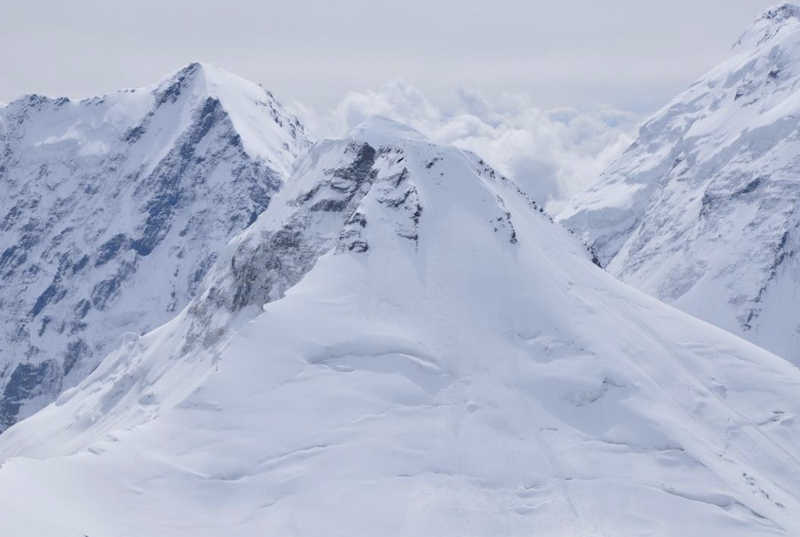
#3 Mont du Vallon (2,952 m) – Méribel’s Crown Jewel
The highest skiable peak in the Méribel valley, Mont du Vallon rises in a striking pyramidal shape that dominates the skyline from Mottaret. The Mont Vallon gondola whisks you from Méribel-Mottaret to the summit in just eight minutes.
From the top, you gaze across the Gébroulaz glacier, the largest glacier in the 3 Valleys, stretching from 2600m to 3,500 m. Two long red runs descend from the summit, offering over 950m of vertical through wild, engaging terrain. If you ski Méribel and skip this peak, you’ve missed the crown jewel.
#4 Mont de la Chambre (2,850 m) – The Gateway Between Valleys
This summit functions as a critical crossover linking Les Menuires to both Méribel and Val Thorens. Reach it from Les Menuires via the Mont de la Chambre gondola, or from Méribel by heading over the Tougnète ridge.
The terrain here suits confident intermediates perfectly. It’s also a strategic waypoint for any peak-bagging itinerary, since four of the top 11 summits sit within two lift connections of this spot.
#5 Pointe de la Masse (2,804 m) – The Belleville Valley Viewpoint
Accessed from Les Menuires via the Pointe de la Masse gondola, this peak offers stunning views rivalling Cime de Caron but with far fewer crowds. The north-facing slopes hold powder longer after a storm.
From Méribel, ski over via Tougnète or Mont de la Chambre. It adds roughly 30 minutes to your journey but rewards you with a quieter, more contemplative summit experience.
Peaks #6 to #10 – From La Saulire (2,738 m) Down to Roc de Fer (2,290 m)
The lower five summits cluster around Méribel, making them easy to reach and ideal for shorter excursions.
- La Saulire (2,738m): the ridge shared between Méribel and Courchevel, reached via the Saulire Express gondola from Méribel Centre. Breathtaking views above the clouds, and home to the Dent de Burgin via ferrata (the highest in France).
- Sommet des Plattières / Côte Brune (2700 m): The transition zone between Méribel-Mottaret and Val Thorens, a key node in the lift network that you’ll cross repeatedly during any peak-bagging day.
- Tougnète (2437m): The ridge separating Méribel from Saint-Martin-de-Belleville, accessed via Tougnète 1 gondola plus Tougnète 2 chairlift from Méribel Centre. Panoramic views of Mont Vallon and Mont Blanc on clear days.
- Dent de Burgin (2400m): Reachable from Méribel village via Golf, Altiport, and Dent de Burgin chairlift. Site of France’s highest via ferrata, a thrilling summer and winter attraction.
- Roc de Fer (2,290 m): Home to the 1992 Olympic Ladies’ downhill course, accessed from Méribel via the Roc de Fer and Olympic chairlifts. The descent delivers 800 m of vertical all the way to La Chaudanne at 1440m.
How to Plan the Ultimate 3 Valleys Peak-Bagging Day from Méribel?
You can bag four or five of these summits in a single day if you start early and plan your connections. Here’s a tested route starting and ending in Méribel:
- Méribel Centre → La Saulire (peak #6) via Saulire Express. Enjoy the sunrise panorama, then ski down to Mottaret.
- Mottaret → Plattières → Côte Brune → Cime de Caron (peak #2). Hit the cable car before the mid-morning rush.
- Ski to Val Thorens → Bouchet chairlift → Pointe du Bouchet (peak #1). You’re now standing on the roof of the domain.
- Return via Mont de la Chambre (peak #4) by skiing back through Les Menuires.
- Cross the Tougnète ridge (peak #8) and descend into Méribel for après-ski.
Lifts open between 8:30 and 9:00. Travel light, carry snacks, and keep a close eye on last-lift times for return connections (typically 16:30 to 17:00 depending on the sector). A local Méribel-only pass won’t cover this route. You need the full 3 Valleys ski pass to reach Val Thorens and Orelle summits.
Which 3 Valleys Ski Pass Do You Need and How to Get the Best Deal?
A local resort pass (Méribel-only, for instance) covers just one valley. To reach most of these summits, you need the full 3 Valleys pass. The difference matters: without it, you’ll hit a barrier the moment you try crossing into Val Thorens or Orelle.
Key pass options for peak-baggers in 2026:
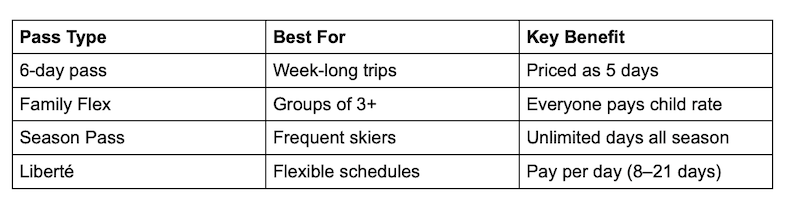
Every pass includes free cancellation up to the day before skiing, and purchasing online lets you skip the ticket office queue entirely. Saturday passes sometimes come with a 20% online discount, so booking early pays off.
Essential Tips for High-Altitude Skiing Across the 3 Valleys
Above 2500m, conditions change fast. Expect colder temperatures, wind exposure, and sometimes zero visibility. Always check the mountain forecast before targeting the highest summits, especially Pointe du Bouchet and Cime de Caron.
Snow quality stays remarkably consistent thanks to altitude and over 2800 snowmakers covering 56% of the piste network. The season typically runs from early December to late April. On whiteout days, Méribel’s central position lets you retreat to tree-lined lower slopes while keeping most peaks within reach for the next clear morning.
Consider Carré Neige ski insurance before your trip. It covers helicopter rescue, medical evacuation, lift pass reimbursement and medical costs on the mountain. A small investment that removes a lot of worry when you’re exploring remote high-altitude terrain far from the base village.