
Finishing a half marathon gives you a useful starting point for a marathon. You know what it feels like to follow a training routine, spend a couple of hours or more on your feet and keep going when running becomes uncomfortable. Moving from 13.1 miles to 26.2 miles, however, brings new demands. Longer outings take more planning, recovery matters across the whole week, and eating during a run becomes something to discover.
The aim is to build a routine you can sustain until race day. That means choosing an achievable event, increasing training gradually and learning how to manage your effort over several hours. Your half marathon experience will help, but there is no need to rush straight into your next distance challenge.
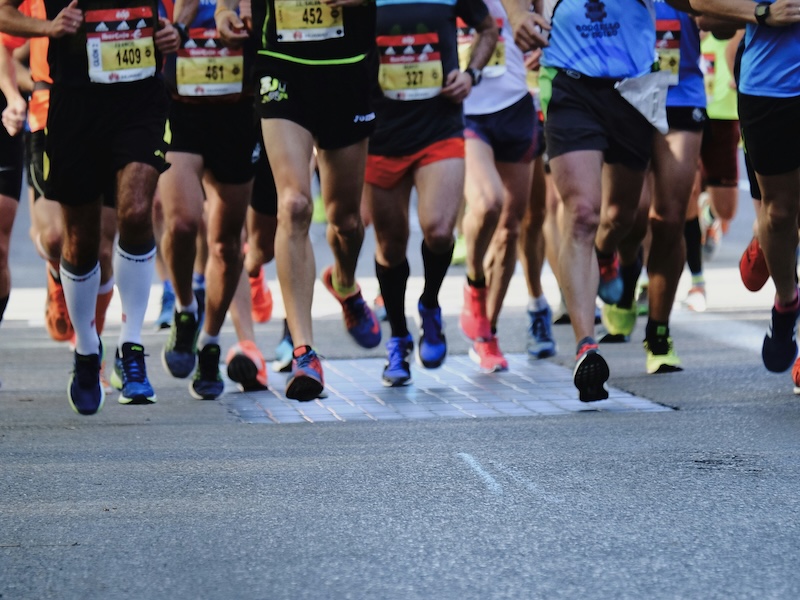
Choose a race that gives you enough time to train
Start with your current training rather than your best half marathon result. A race you completed last autumn says less about your readiness than the running you have managed over the past month. Look at how regularly you run, how you recover and whether your usual routes still feel comfortable.
A structured marathon plan can help you organise the build-up. For example, London Marathon Events publishes a 16-week beginner plan. That is a useful indication of the commitment involved, rather than a promise that everyone will be ready within four months. Allow additional time if you need to rebuild regular running first or recover from a recent race.
Check the event itself before entering. A hilly trail marathon and a flat road marathon require different preparation, even though the distance is the same. Consider the terrain, likely weather, cut-off time and travel arrangements. Pick a date that leaves room for training around work and family, especially during the weeks when your long outings become more demanding.
Build a week you can repeat
The long run gets plenty of attention, but the shorter outings make up an important part of marathon preparation. They allow you to develop consistency without putting all your running into one exhausting weekend session. Choose a plan whose starting workload resembles what you can already manage comfortably.
As an example of how a week could fit together, a runner already accustomed to four outings might run easily on Tuesday, complete a slightly longer run on Thursday, have a short easy outing on Saturday and do the long run on Sunday. Monday, Wednesday and Friday provide days without running. This is an illustration, not a requirement to add a fourth run if three currently suit you better.
Keep most running comfortable enough for conversation. If you are breathing too hard to speak in sentences, ease back. Hills, strong winds and muddy paths can make an ordinary pace feel demanding, so let effort guide you. You do not need to turn every run into a test of your half marathon speed.
Extend long runs without chasing a fixed number
Begin with a long run you can complete comfortably in your current condition. Even if you recently raced 13.1 miles, that does not automatically make a longer run the right choice for the following weekend. Give yourself time to recover from the race before building again.
Use the progression in a suitable plan, including its easier weeks, and adjust when recovery is poor. Repeating a distance can be more useful than extending a run simply because the calendar says so. Avoid increasing distance, adding hard hills and introducing faster sessions together; it becomes difficult to judge which change is leaving you tired.
You also do not have to run the full marathon distance in training. The Boston Athletic Association’s novice programme, for example, uses long runs that reach 16 to 18 miles. Other programmes differ. The sensible peak for you depends on your experience, overall training and how long those miles take. A qualified running coach can help adapt a plan if its longest outings seem excessive for your pace.
A brief training note helps reveal patterns. Record how the run felt, what you ate and whether you were comfortable moving the following day. If each long run leaves you struggling through the next week, review the workload before extending it again.

Make routes work for your training
Marathon preparation can be an opportunity to explore local paths, canal towpaths and quieter roads. For longer outings, choose routes with practical stopping points and an option to shorten the run. Two loops from home can be easier to manage than one remote route with no way back except another hour of running.
Match some of your training to the event. Prepare for a road marathon with regular running on roads or comparable firm surfaces, while a trail event calls for familiarity with its climbs and underfoot conditions. A steep, uneven route may take much longer than its mileage suggests, so account for that when planning your week.
Check the forecast and daylight before heading out. Carry what the route and conditions require, and let someone know your plans if you are running alone in a quiet area. Joining a club long run can provide company, but choose a group whose pace allows you to keep the effort easy.
Practice eating and drinking on the move
Long runs are rehearsals for race-day fuelling. Try a familiar breakfast with enough time to settle, then practise taking carbohydrate during the outing. London Marathon Events suggests beginning within the first hour and taking further small amounts regularly. The quantity and timing need to suit the product, the duration of your run and your stomach.
Gels, chews and other portable carbohydrate foods offer different options. Read the serving information and follow directions about taking water with them. Test your choice repeatedly, including how you carry it and open the packaging with cold or wet hands. Waiting until race morning to discover that a gel is difficult to swallow adds an avoidable problem.
Some runners choose to use hydration drinks during longer outings to take in fluid and electrolytes, with carbohydrate included in some products. Check the label carefully: an electrolyte tablet with little or no carbohydrate will not provide the same fuel as a carbohydrate-containing sports drink. Count any carbohydrate in your drink alongside what you eat.
Plan access to fluid, whether through a bottle, a running vest or a reliable refill point. Let thirst guide drinking and adapt to the conditions rather than forcing a fixed amount at every stop. Excessive drinking can be dangerous, and adding electrolytes does not remove that risk. A sports dietitian can help if you need an individual fuelling and fluid plan or repeatedly struggle with stomach problems.

Give recovery space in the plan
A training week includes the time between runs. Arrange longer sessions so you have a realistic opportunity to eat, rest and sleep afterwards. If a Sunday long run regularly follows a very late Saturday night, moving it may be more useful than finding a more ambitious training schedule.
Keep meals regular as your running grows, including carbohydrate foods to support training and protein sources for recovery. Have something convenient ready after a long outing, especially if you tend to arrive home tired and put off eating. Marathon preparation is difficult to sustain when you repeatedly finish sessions hungry and then rush into the rest of the day.
If strength work is already part of your routine, keep manageable sessions in the week. Controlled calf raises, squats and step-ups are examples of exercises to discuss with a coach if you are new to strength training. Introduce unfamiliar exercises cautiously so soreness does not disrupt your runs.
Treat persistent pain differently from ordinary tiredness. Pain that changes your stride, worsens during running or keeps returning needs assessment rather than another mileage increase. After illness or several missed sessions, resume at a manageable level. Do not squeeze missed runs into the following week.
Rehearse your pace and race kit
Your half marathon pace is unlikely to be a sensible starting pace for your first marathon. Choose an effort that feels controlled early on, and use training to learn how that feels without constantly checking your watch. Planned walking breaks are also an option; practise them so they become part of your approach from the start.
Wear your intended shoes, socks and clothing on several longer runs. Check for rubbing, awkward pockets and a belt or vest that bounces once loaded. Small irritations that are tolerable over a short outing can become distracting after several hours.
Read the event information in advance. Find out where drinks will be available and which products, if any, the organiser provides. If those differ from what you have practised with, work out how you will carry your own supplies. Race morning is easier when breakfast, transport and kit are already decided.
Arrive rested and start patiently
Follow the taper in your chosen programme. This is the final period when training volume reduces so you can recover from the build-up; the Boston Athletic Association’s novice plan includes a two-week taper. Keep to the planned shorter sessions instead of adding a last long run to reassure yourself that you are ready.
On race day, resist the temptation to follow runners moving faster than your intended effort. Settle into a rhythm, use the fuelling routine you have practised and adjust your expectations if conditions are warmer or windier than expected. Breaking the course into sections can make the distance easier to manage.
Reaching the halfway marker may feel familiar, but you still have another half marathon ahead. Stay patient there. The months of preparation are meant to help you continue steadily beyond that point, with enough energy and confidence to tackle the unfamiliar miles to the finish.