
As soon as I book a holiday to a new destination, short or long, I turn into a child in a sweetie shop as I excitedly choose from a “pick and mix” of tourist attractions, places to visit and things to do. With a four-night trip to the Spanish city of Malaga in the offing, I was keen to make the most of my time both in the city and exploring nearby villages, towns and countryside.

First, though, the details: Hubby G and I enjoyed a city break to Malaga with Jet2holidays in September with flights and hotel included.
Flights: There are plenty of different options for flights to Malaga with Jet2 and we chose flights from Glasgow Airport to maximise our time in the Spanish city. The early Sunday flight gave as the whole day to stroll about Malaga, while the later morning return flight one Thursday meant we didn’t have to rush breakfast at the hotel – and we still had time to drive back north to the Scottish Highlands on the same day as the flight.
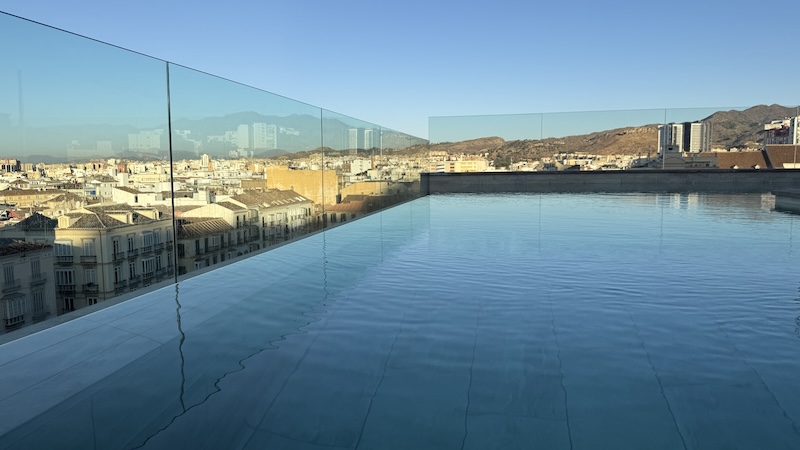
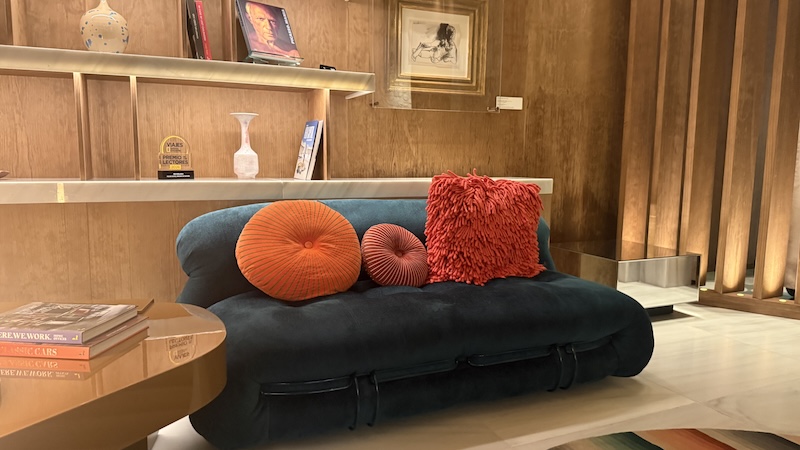
Hotel: We chose the new-build five-star ME Malaga hotel for a treat. It’s centrally located and close to many of the city’s main historic attractions with a roof top infinity pool and sun terrace, roof bar and beautifully outfitted rooms. Make sure you leave plenty of time for a long, lazy breakfast, too. Top tip: Try to book a room with city views.
Transport: With plans to visit locations out of the city, we also booked a hire car from close to the airport.
Where is Málaga?
Málaga is located on the southern Mediterranean coast of Spain, in the region of Andalucía. It’s known as the gateway to the Costa del Sol and is well connected to the UK and other places across Europe.
City sightseeing in Malaga
Overview: Roman ruins, Moorish fortresses, art, culture, tapas tavernas and wide-sweeping Mediterranean views (especially from our hotel rooftop) sum up Malaga. It’s easy to wander around on foot and there is plenty to see and do.
Arriving at Málaga-Costa del Sol Airport by lunchtime – and having picked up the car – meant that Gordie and I had plenty of time to stroll around the city. Our hotel was very close to the historic attractions.
We deliberately slowed our pace and enjoyed a couple of stops, first for an ice-cream and then a bar, so that we could settle into our mini break.
Even in September, the temperatures were warm – around 27C – and coming from the end of summer in Scotland, we needed time to acclimatise.
As we sipped cold, local beers, we made a short list of the attractions we wanted to see during the trip and a couple of restaurants that look good for evening meals.
Historic highlights
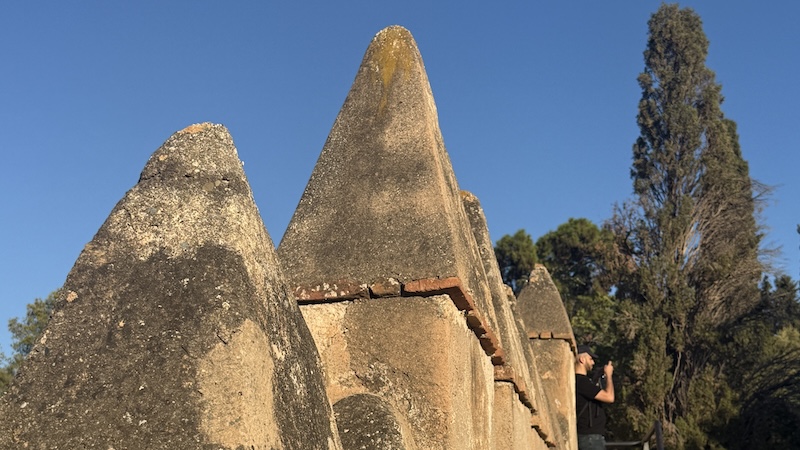
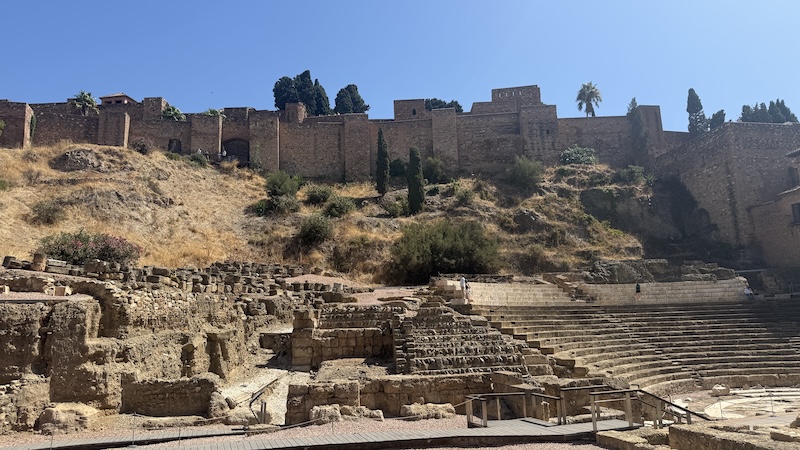
The Alcazaba of Malaga: At the heart of Malaga and located on the slopes of Mount Gibralfaro. The Alcazaba was first occupied around 600BC and later by the Romans. In the 8th century, it became a military fortress.
Gibralfaro Castle: Built in the 14th century and perched above the city at a height of around 130m. Great views and an interesting place to visit.
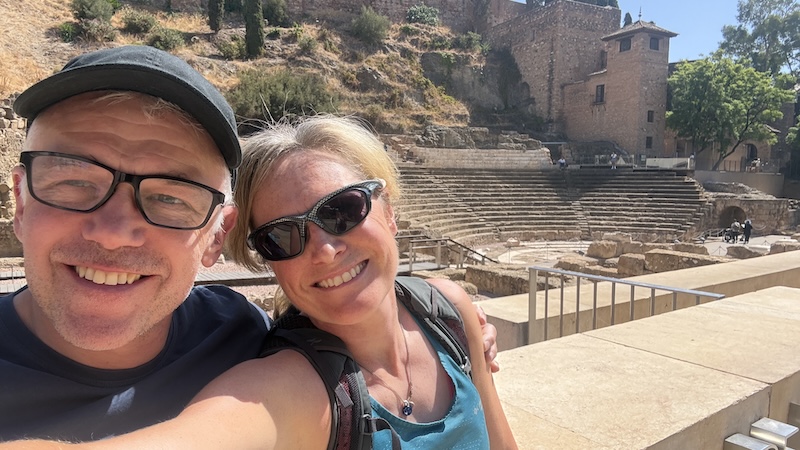
Roman Theatre: Said to be the oldest surviving monument in Málaga and situated at the foot of the Alcazaba fortress.
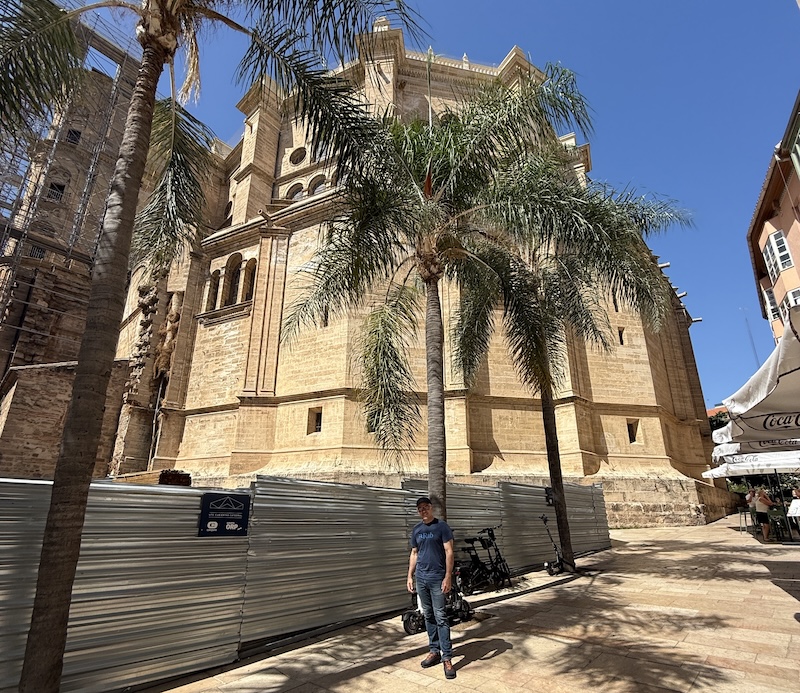
Malaga Cathedral: Built form the 16th century, the architecture combines Gothic, Renaissance and Baroque.
Sacred Heart Church (Iglesia del Sagrado Corazón): Built in 1920 in a neo-Gothic style with pointed arches and stained-glass windows.
Art, especially Picasso
Malaga is famed as an international art and cultural hub and particularly connected to the Spanish painter, sculptor, printmaker and ceramicist Pablo Picasso (1881 to 1973), who lived in the city as a child and returned many times during his lifetime. His art and life are remembered all over the city and you can walk in his footsteps.
Casa Natal Picasso is the artist’s birthplace and has been turned into a museum. In Plaza de la Merced, there is a life-size bronze statue of Picasso sitting on a bench.
The Church of Santiago Apóstol is where he was baptised. Plus there is the Picasso Museum, which has some 200 of his artworks.
Malaga Museums
The Malaga Museum: Located inside the 18th-century Palacio de la Aduana, which is a former customs house near the city’s port. A wealth of Malaga’s history and culture are displayed here.
Museo Revello de Toro: Showcases the work of another 20th century artist, Félix Revello de Toro. He was born Malaga and best known for his portraits and figurative paintings.
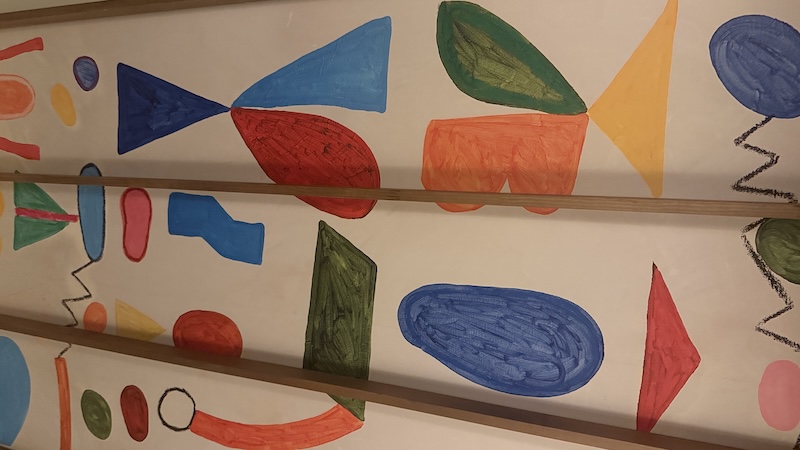
Centre Pompidou Málaga: Situated in the city’s modern port area, Muelle Uno, where you’ll easily spot the colourful glass cube entrance. El Cubo was designed by French artist Daniel Buren. From inside the design changes as the sunlight filters through the panels.
Beaches and Parque de Malaga
Malaga has beaches, if you enjoy sunbathing and swimming in the sea. It is also home to the shady – and cooling – Málaga Park (Paseo del Parque).
The park was created in the late 19th century on land reclaimed from the sea and was part of a project to expand the port. It covers 30,000 square metres with more than 350 plant species from five continents.
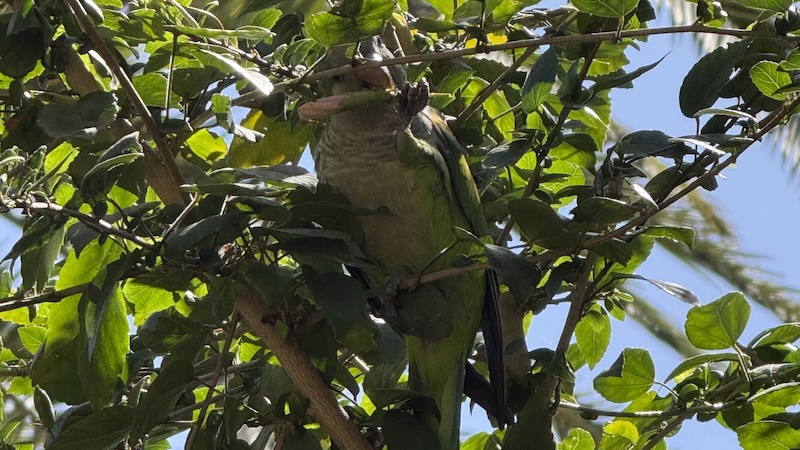
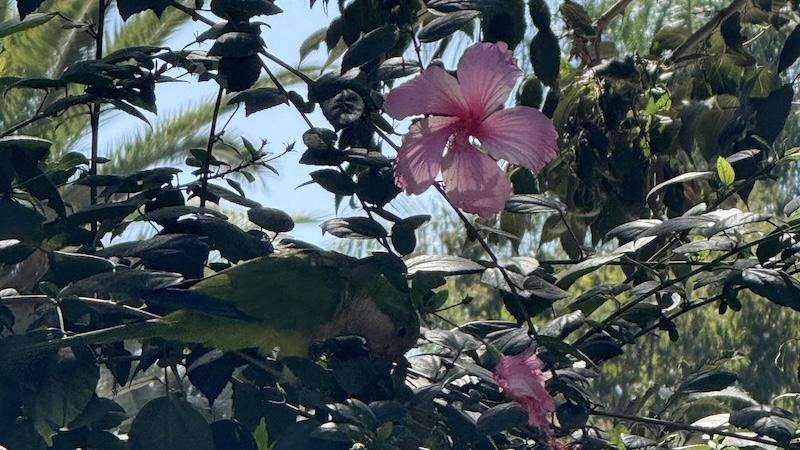
We enjoyed spotting parrots in the Jardines Música Vieja (Old Music Gardens), an historic section located on the northern side of the main Parque de Málaga.
Rooftop cocktails
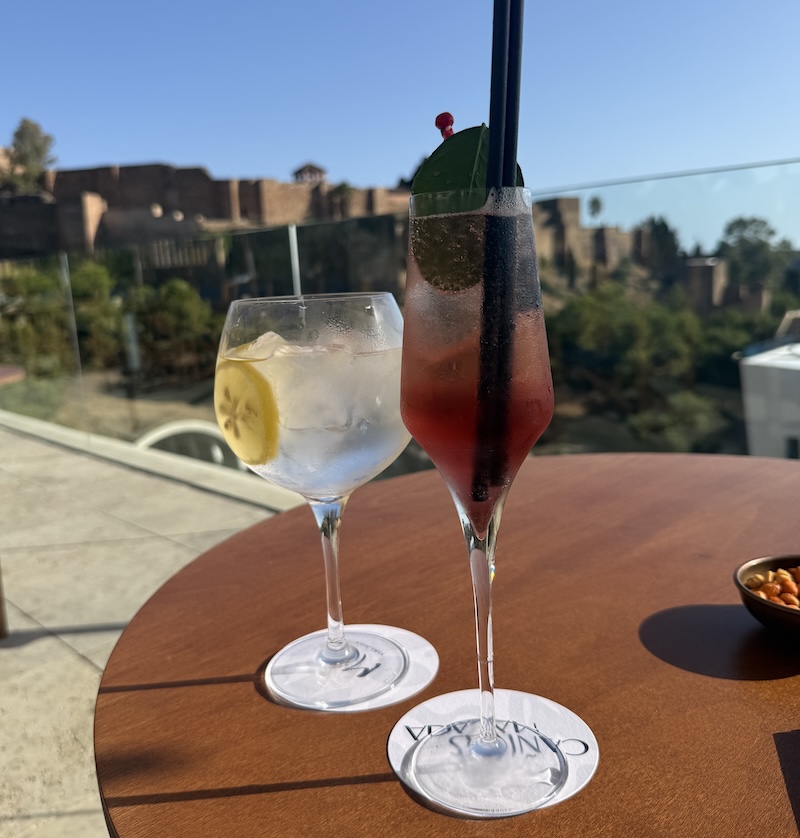
A lovely highlight of our hotel was the rooftop that offered the perfect spot for evening cocktails looking over the city and enjoying a sunset.
Day trips from Malaga
Day trip 1: Nerja & Frigiliana
Our first away day trip was to the town of Nerja, a beautiful coastal town around an hour’s drive east of Malaga. Our friends, Paul and Sandra, live here and we wanted to visit their home.
While there, they recommended a walk to a bar located in the hills nearby and the mention of a bar and beer was all that was required to motivate G to lace up his trainers.
Admittedly, it was a hot walk and almost entirely uphill but the views were superb, especially as we gained height. We looked out over the sea to the south, sparkling beneath a deep blue sky.
Around half-way, we came across the white-painted village of Frigiliana, which is famous for its Moorish old quarter and narrow streets decorated with ceramic mosaics.
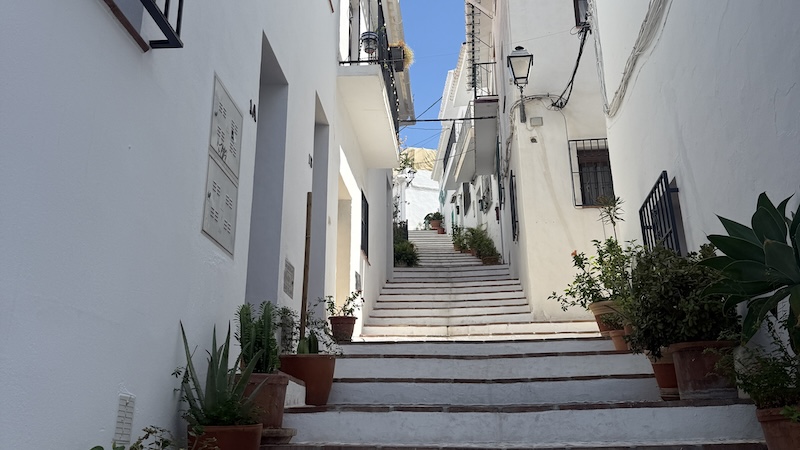
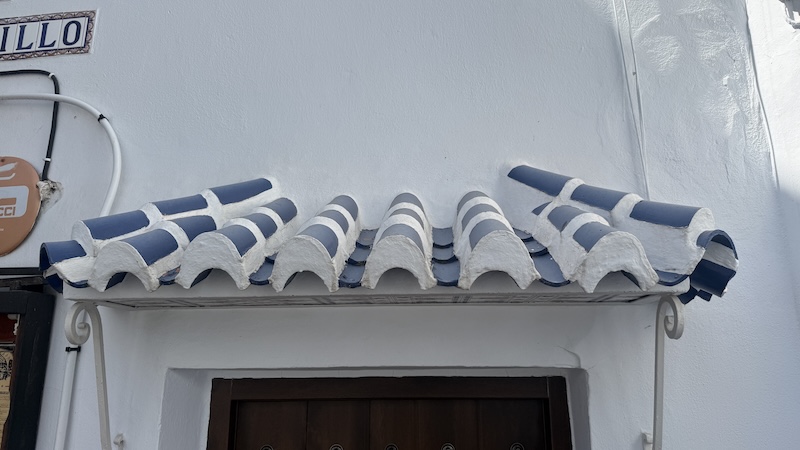
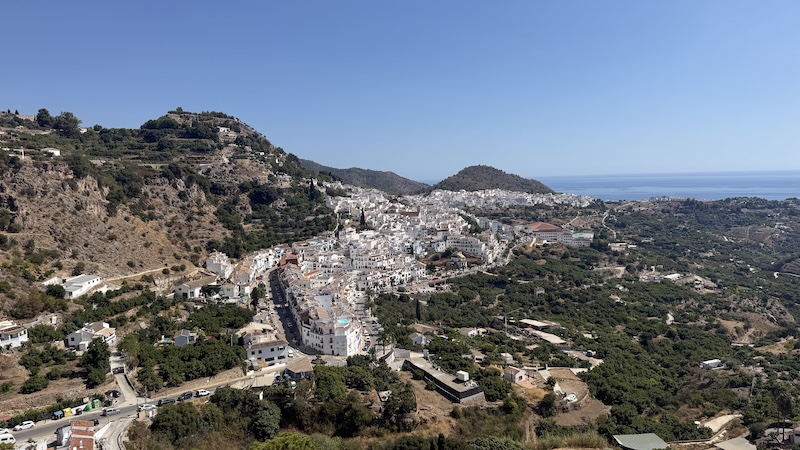
We enjoyed strolling the narrow and winding streets, browsing small shops and stopping for lunch and cold drinks.
We had been hoping that the higher we ascended, the cooler it would become but this didn’t happen! What kept us going in the last part of the 13km walk with 770m of ascent, was the thought of that cold beer.
Certainly, when we did arrive at El Acebuchal de Competa and the promised Restaurant El Acebuchal, the beers did taste delicious. We had also been hoping to buy the tasty home-made bread suggested by our friends but sadly the shelves were empty by the time we arrived.
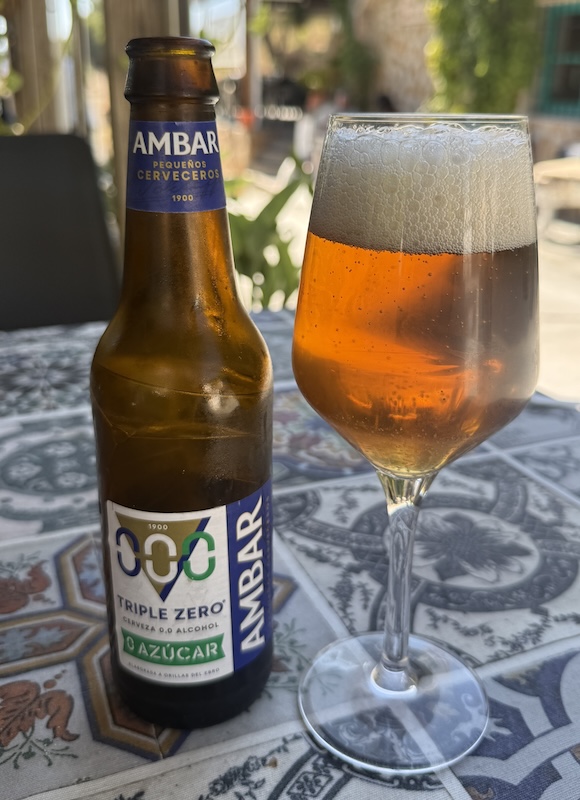
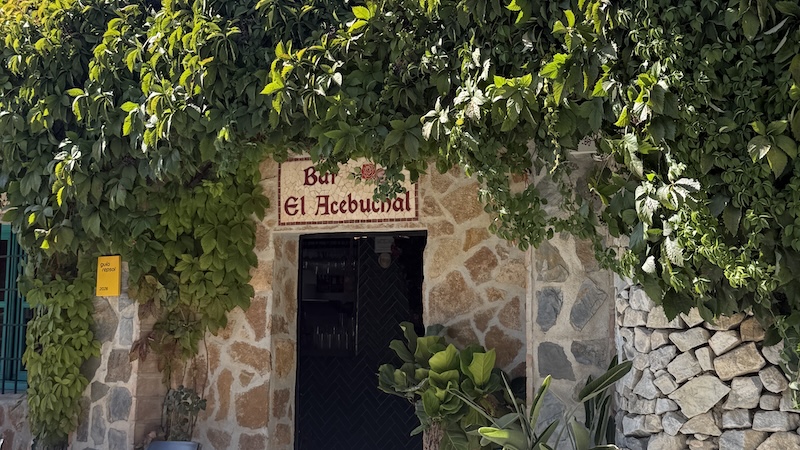
Paul kindly drove from his home to pick us up and we gladly took the lift back down to their villa for a superb barbecue.
If you want to spend a day away from Malaga, both Nerja and Frigiliana make great trips.
Day 2: Ronda & Sentinel de la Bogedes
I had a vague memory of visiting Ronda in the mid 1990s during a backpacking holiday of Andalucia with a friend. (I checked this on my return and found photographic evidence in a good old-fashioned photo album from 1992).
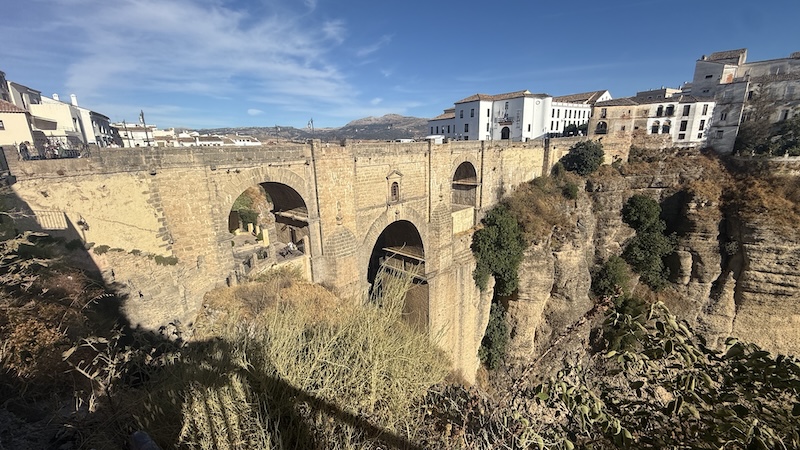
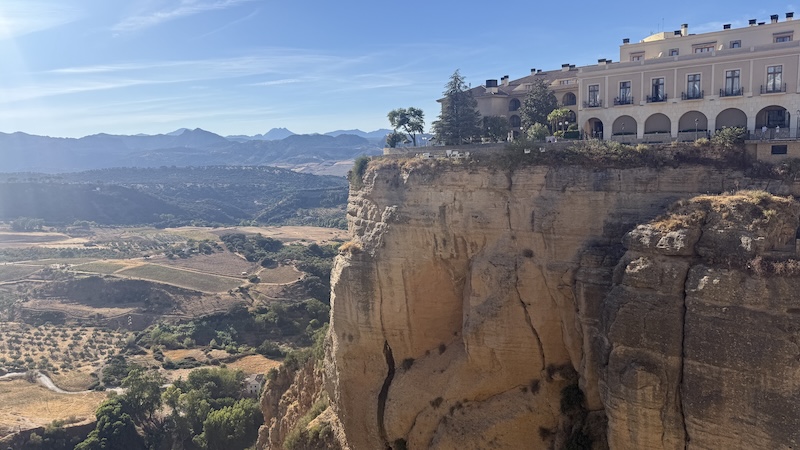
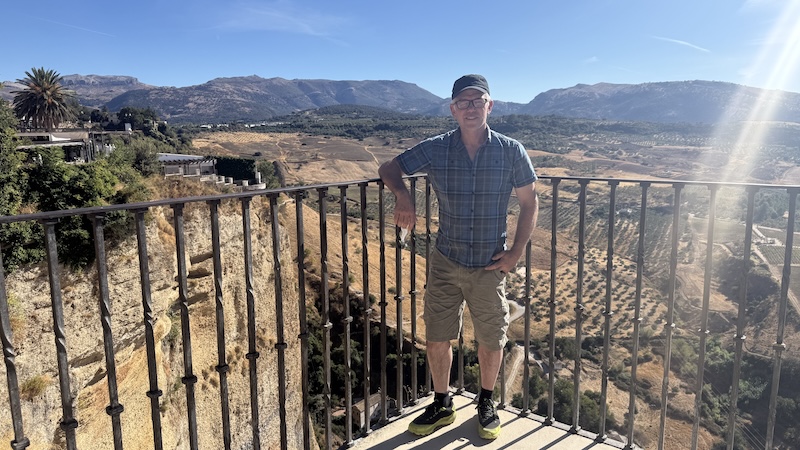
But it was so long ago, that my memory of the historic mountaintop town had almost completely faded despite its dramatic setting. The clifftop views and deep gorge, El Tajo, that divides the settlement are breath-taking.
Ronda is about 1.5 hours drive west of Malaga and a great spot to visit, although even in September mid-week was very busy with people.
We wished we had allowed more time for Ronda, but we had spent more time that we thought we might in Sentinel de la Bogedes earlier in the day. A walk into the gorge would have been great and we have resolved to revisit Ronda next time we are in southern Spain.
There is plenty to see in Ronda, including Puente Nuevo, the 18th-century bridge completed in 1793 that stands almost 100m tall and spans the El Tajo gorge. It connects the Moorish old town with the 16th-century quarter.
There is a bullfighting ring, Plaza de Toros de Ronda, built in 1785 and also home to an historical museum; Moorish thermal baths; an ancient palace, Palacio de Mondragón; and Morrish and Renaissance gardens, which house a municipal museum; plus an old town and plazas to stroll around.
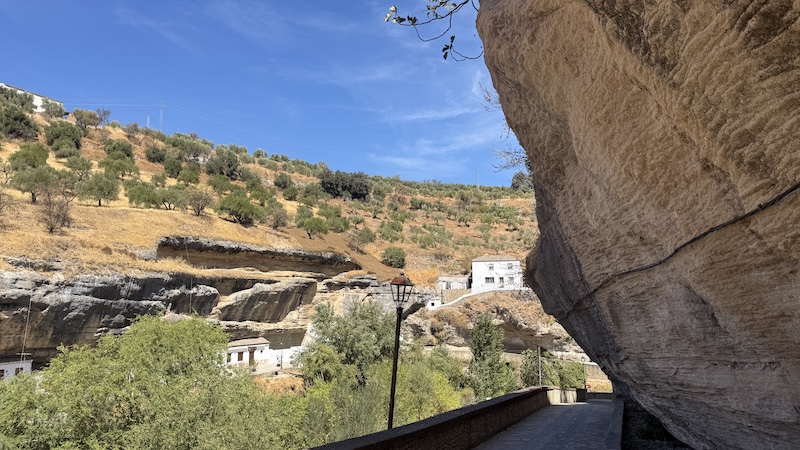
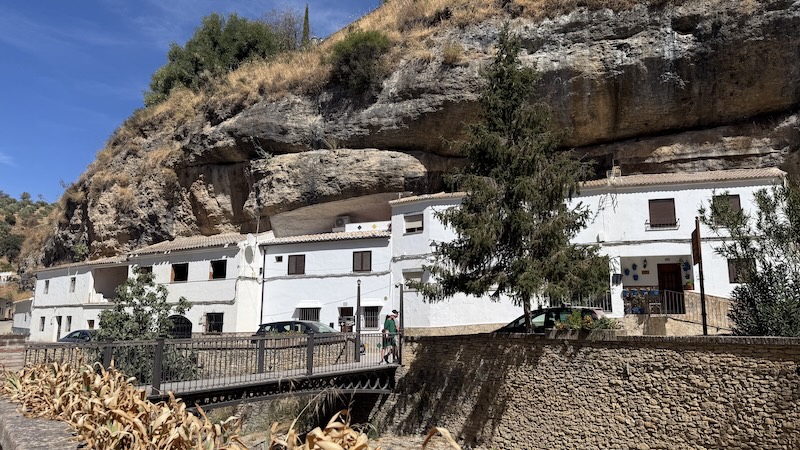
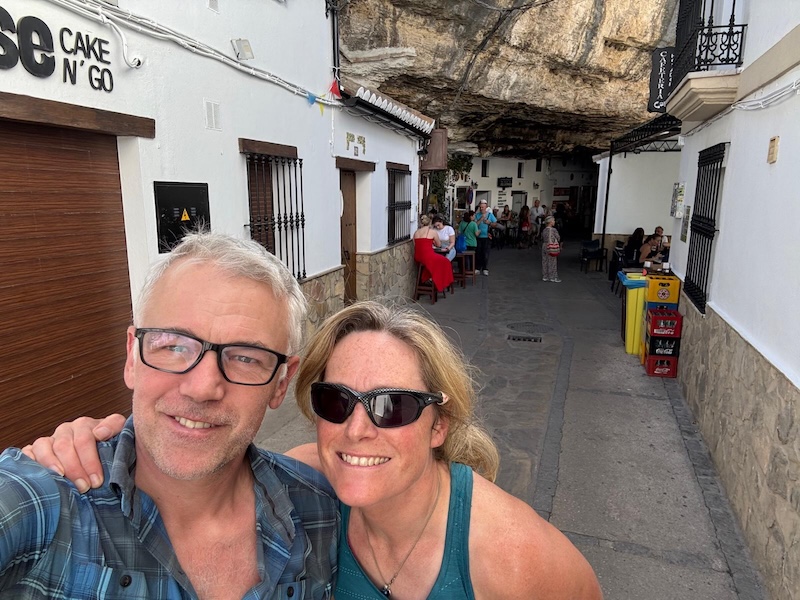
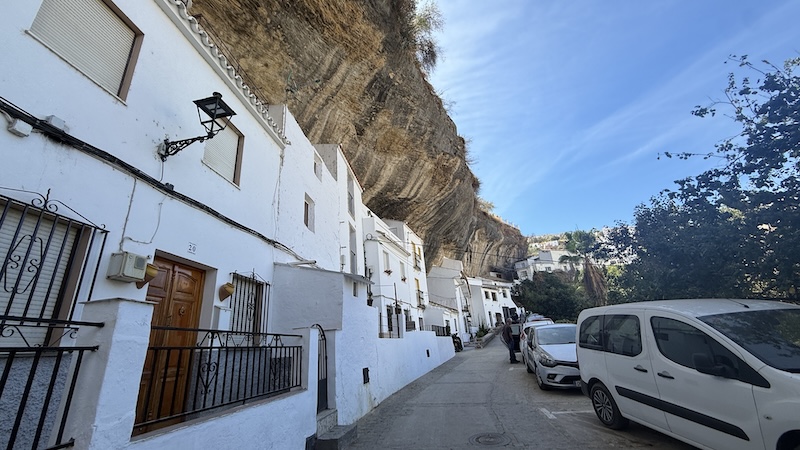
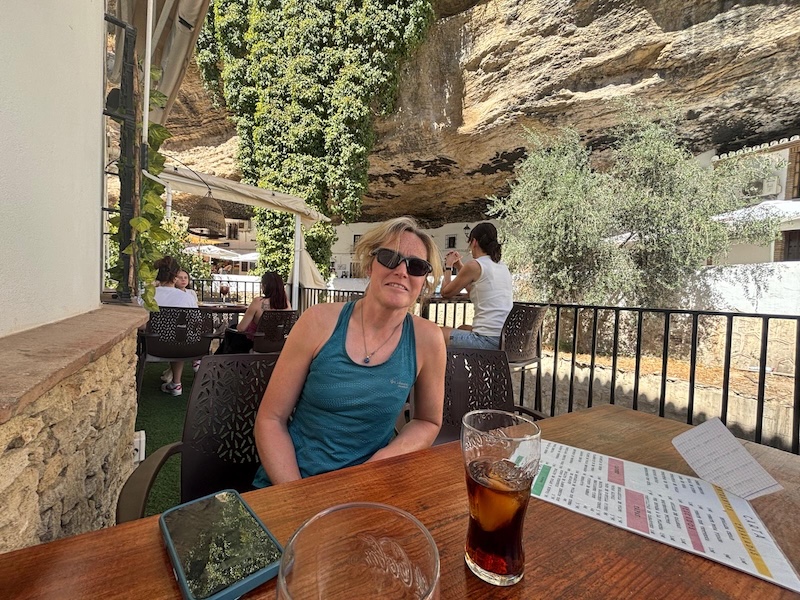
Sentinel de la Bogedes, about half an hour’s drive north of Ronda, had really captured our imaginations. We had expected to have a quick look around and head to Ronda for the better part of the day, but it is a fascinating village.
The white village is situated in the Cádiz province and is celebrated for for its houses and businesses built directly under massive rock overhangs along a river canyon.
We had thought there would be one or two streets built in this fashion but a large part of the village is created from excavating the rocky crags. It was impressive and fascinating and G and I enjoyed wandering around the odd network of streets on either side of the canyon.
We also had the best tapas of the entire trip.
Another place to visit near Ronda, which we had been to before, is Caminito del Rey. It comprises a long walkway affixed to the steep walls of a narrow gorge in El Chorro, near Ardales in the province of Málaga.
Day 3: Riogordo and Tajo Gomer
Again, we were keen to meet with other friends, Sophie and Charlie, in Riogordo, who have also made their home in Spain. But first, we were keen to explore some of the local countryside.
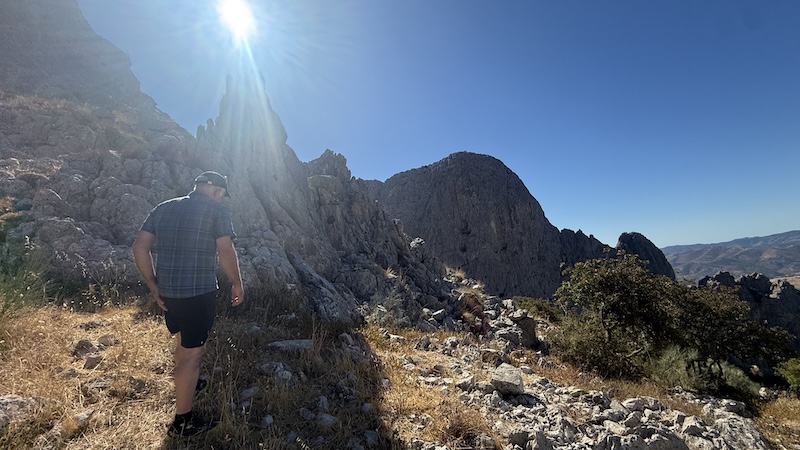
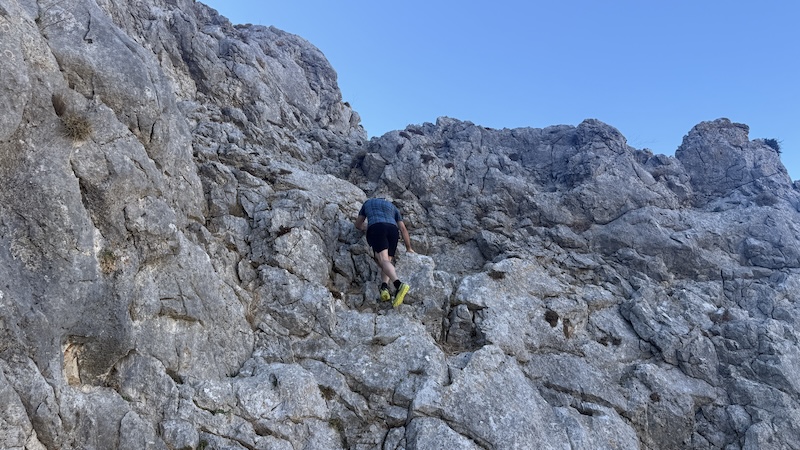
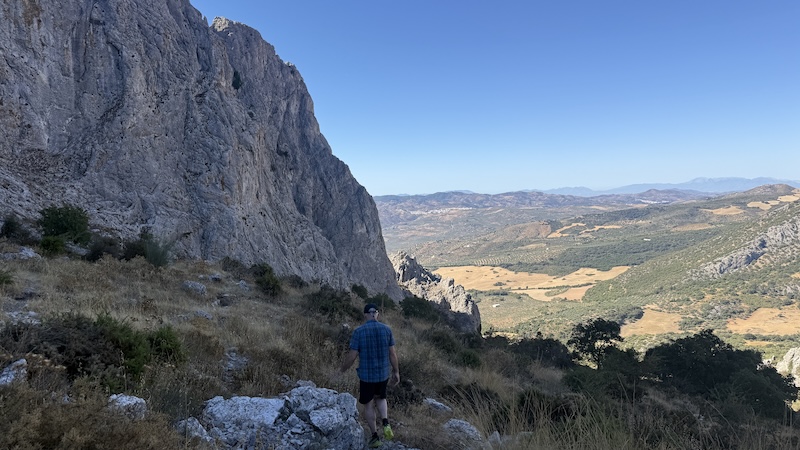
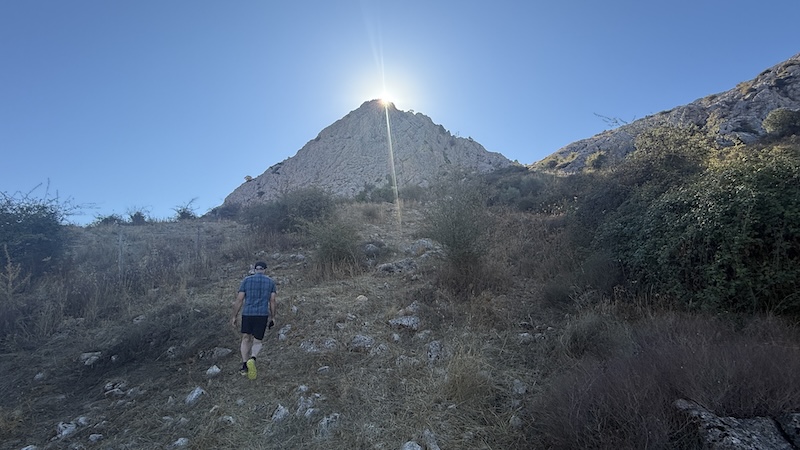
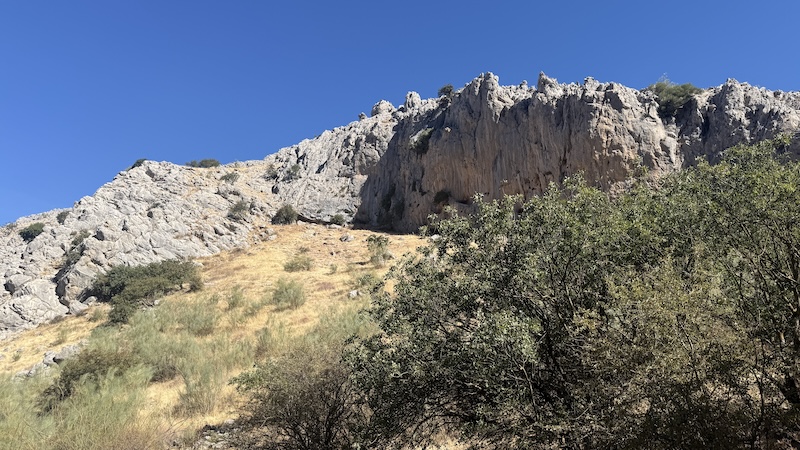
We had spotted an area of limestone mountains and cliffs, including the Tajo de Gómer, near Riogordo in the Axarquía region.
Tajo de Gómer is situated close to other cliffs, such as the Tajo del Fraile and Tajo de Doña Ana, which combine to be known as the Tajos de Sábar or the “Pyrenees of Málaga” due to their sharp, rugged contours.
After checking out a few trails and routes on various hiking apps, including Komoot and All Trails, we ended up making up our own route on very mixdd terrain. We are both experienced hikers and navigators so our off-the-cuff route was well within our capabilities but it did involve a wide variety of paths, from tracks and trails to rock scrambling and stomping through rough woodland and vegetation.
The rewards for “adventure hike” were superb views of the near by mountains, as well as the peaks further afield The heat and dry landscape were in huge contrast to our usual environs in the Scottish Highlands, but we enjoyed discovering new foothills over several hours of walking.
PS. There may have been equal joy – or even greater joy – when we then arrived at Sophie and Charlie’s home with a lovely shaded verandah, amazing views of those Malaga Pyrenees, cold beers, plus a delicious lunch of locally sourced produce!
Final evening strolls
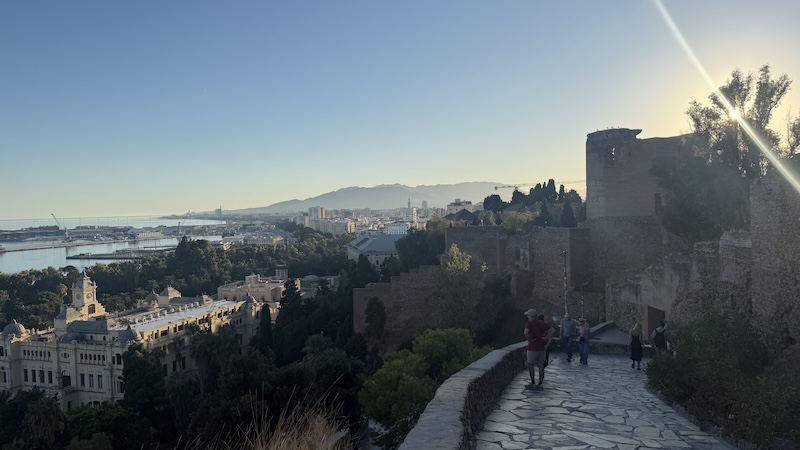
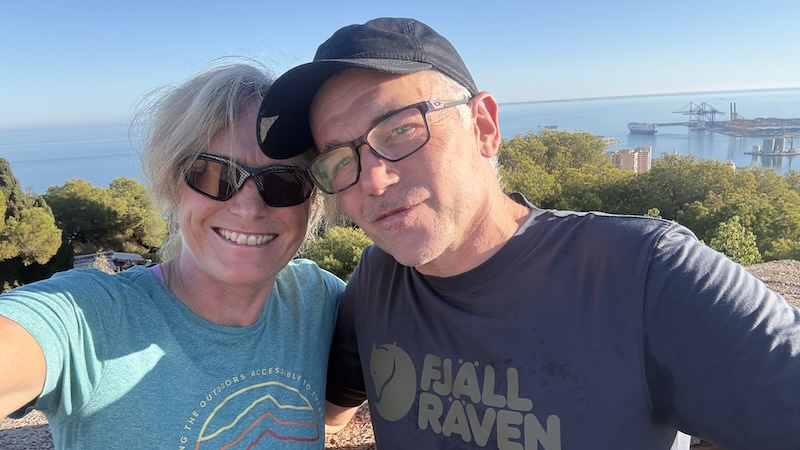
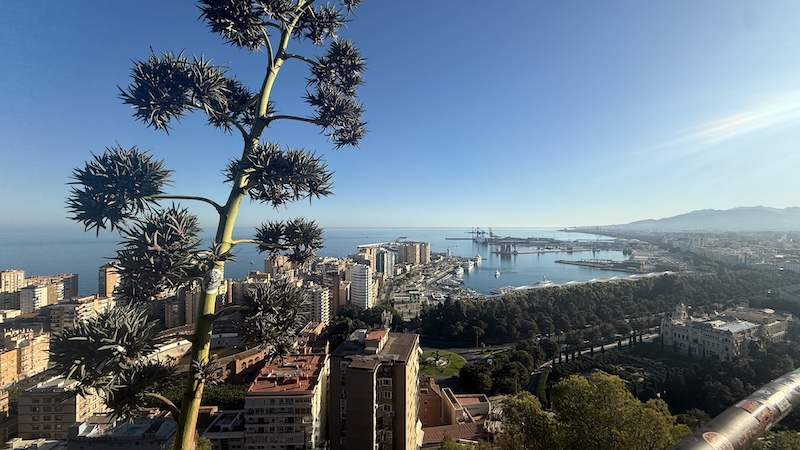
We had packed so much into our short break but still we were keen to make the most of our final evening in Malaga. Before a meal – more delicious tapas and local wine – we meandered uphill to the castle to enjoy the views as the sun set beautifully over the Mediterranean. After so much activity, it was very easy to slow down and linger at every view point.
Malaga makes a brilliant destination for a short or longer break, whether planned well ahead or as a last-minute holiday.