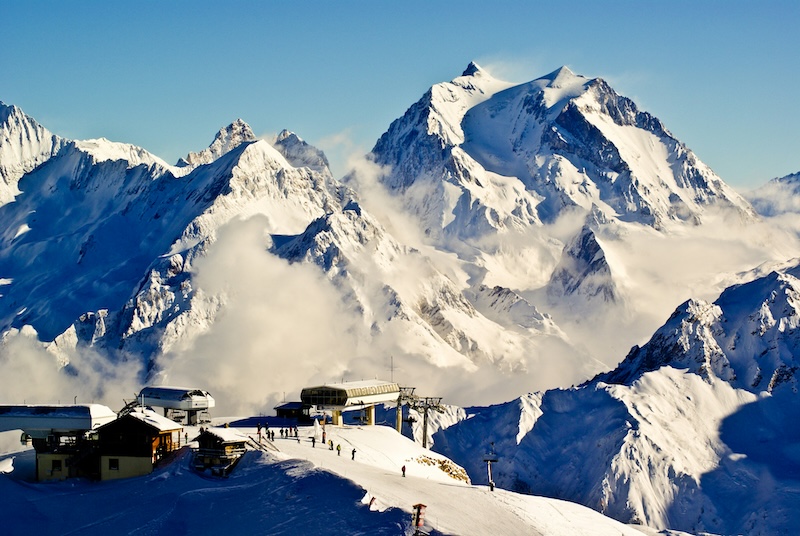
A large ski area doesn’t require a large resort base. In fact, a smaller Alpine village can give you the best of both worlds: Extensive terrain during the day and an easier, way more relaxing place to return to each evening. You spend less time navigating sprawling resort centres, yet linked lifts still let you cover serious distances. The idea works especially well if you enjoy exploring on skis but prefer a village where the supermarket, hire shop and first lift sit within a manageable area.

Look beyond the size of the village
When you compare ski holidays in small Alpine villages, focus first on how quickly you can reach the wider domain. La Tania is a good example. The compact French village sits below Courchevel, with gondola access towards hundreds of kilometres of linked skiing.
My experience of planning a self-booked group ski holiday in La Tania shows that the village has useful shops, cafés, restaurants and ski hire without the scale or pricing of its better-known neighbour. Once you travel uphill, however, the local feel gives way to a much bigger playground.
The official Les 3 Vallées ski area guide lists 600km of connected pistes across varied altitudes and sectors. That contrast makes a small base feel less restrictive. You can ski towards Méribel or farther into the Belleville Valley, then return to somewhere where an evening meal doesn’t require an entire bus journey across town.
Check the links, not just the piste total
Big numbers tell you very little about how much terrain you will actually reach. Before you book, trace the route from your accommodation to the first uplift, then count the lifts needed to enter the main network. A village that links directly through one gondola may work better than a larger resort that requires a shuttle before you even click into your skis.
You should also inspect the return journey. Is the home run suitable for everyone in your group? Can less confident skiers download by lift? Which connection closes first, and how much time will you need to reach it from the far side of the domain?
Châtel illustrates why this homework matters. My account of skiing from Châtel across the Portes du Soleil describes a working Alpine village with substantial local slopes and links that open routes into both France and Switzerland. Strong skiers can make a full day of travelling through several sectors, while others may find enough variety closer to the village. And that local depth provides useful insurance. After all, if wind, poor visibility or a closed connection prevents a long tour, you still want enjoyable pistes instead of feeling stranded in a small corner of the map.
Make altitude and weather part of the decision
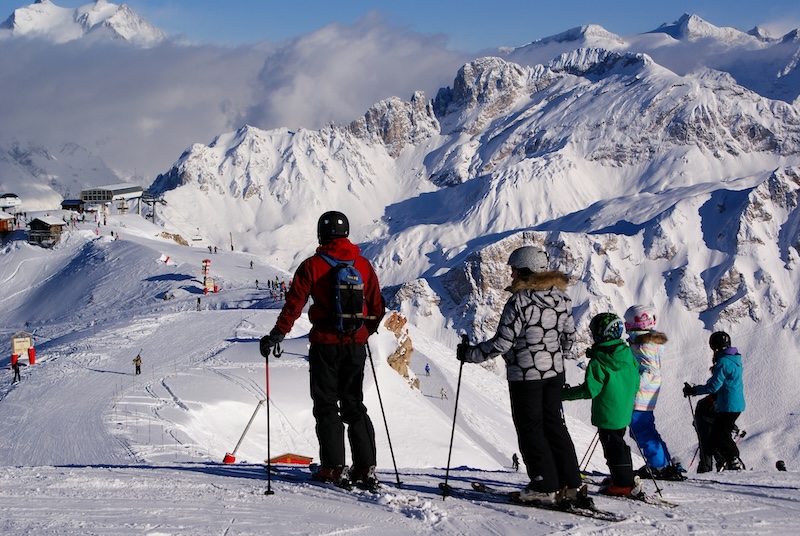
Smaller villages often sit lower than purpose-built, high-altitude resorts. Forested runs can offer better visibility when cloud moves in, but lower home slopes may suffer during warm periods. Check the village altitude, slope aspect and snowmaking on the return routes rather than relying on the highest point advertised for the entire ski domain. Work with your travel dates, too: A base that works well in February may demand more careful consideration in early December or late spring.
Warth-Schröcken offers a different version of staying small. Its restrained village scale connects into Ski Arlberg, where the official ski area information records 300km of runs and 85 lifts. The local sector includes beginner areas, while linked lifts provide access towards Lech Zürs and onwards through the Arlberg network.
Even so, you should check which pass includes the connections you want and confirm the day’s lift status before setting out. A large circuit can look straightforward on a piste map, but weather, queues and tired legs quickly change the timing.
Choose a village you would still enjoy on a disrupted day
The strongest small base doesn’t depend entirely on every lift running, though. Look for a food shop, several places to eat and a few non-ski options within walking distance. A local bus can help, but you may not want to rely on it for every meal or activity. Families should check how easily children can reach ski school, while mixed-ability groups need a straightforward meeting point near the home slopes.
Think about your evenings as well. A compact village can make the end of the day pleasantly simple: you can put away your skis, walk to dinner and return without organising transport. Yes, you may find fewer bars and boutiques than in a major resort, but that trade-off often suits people who prioritise mountain time.
Remember that the aim is not to choose the smallest place on the map, but to find a base that removes everyday friction while keeping the terrain you want within realistic reach.